
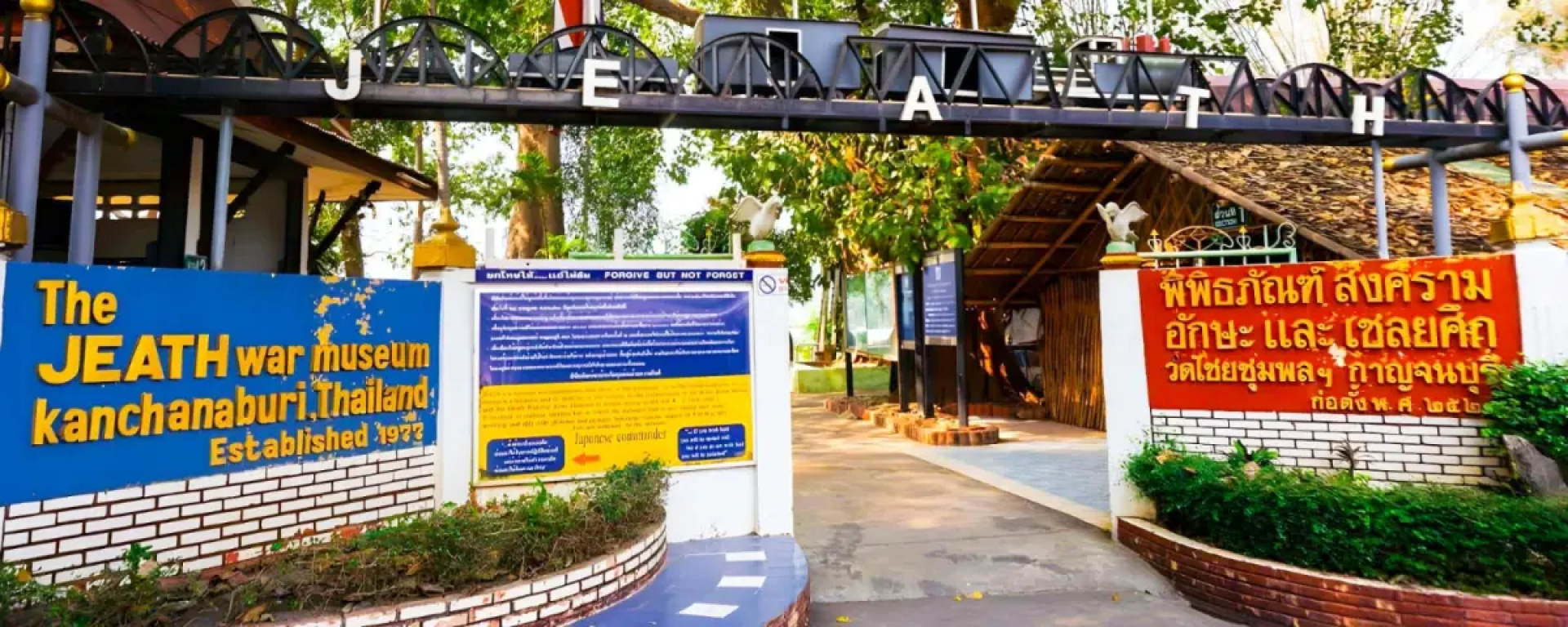
Experience a comprehensive exploration of Thailand's wartime era at the JEATH War Museum. Step into the past and embark on a captivating journey through history, where you will uncover an abundance of secrets waiting to be revealed.
Originally established as a prisoner-of-war camp during World War II, the JEATH War Museum offers a compelling exhibition showcasing artwork, photographs, and tools that were utilized during that tumultuous period. Additionally, the museum provides a poignant portrayal of the remnants of numerous locations affected by the war.
History of JEATH War Museum
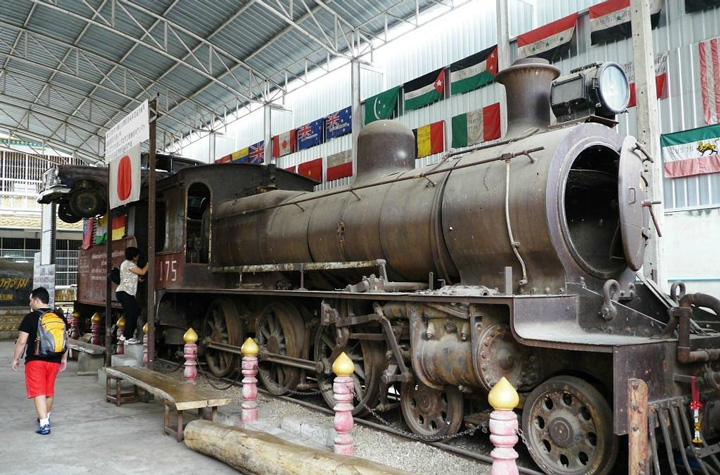
The acronym JEATH represents Japan, England, America/Australia, Thailand, and Holland, the countries associated with the construction of the railway during the years 1942 to 1945. The JEATH War Museum was founded in 1977 by the chief abbot of Chaichumpol Temple, shortly after the Japanese occupation. The museum is located in proximity to the temple grounds.
In the early 1940s, the Japanese army initiated a strategic plan to build an iron bridge that would connect Thailand and Burma. This project was part of their broader ambitions to invade countries in Western Asia. Tragically, the construction of the railway resulted in the loss of over 400,000 laborers and allied prisoners' lives, making it one of the most devastating events in the region's history.
Best attractions of JEATH War Museum
The museum is divided into two distinct sections, each offering a unique perspective on the wartime experience.
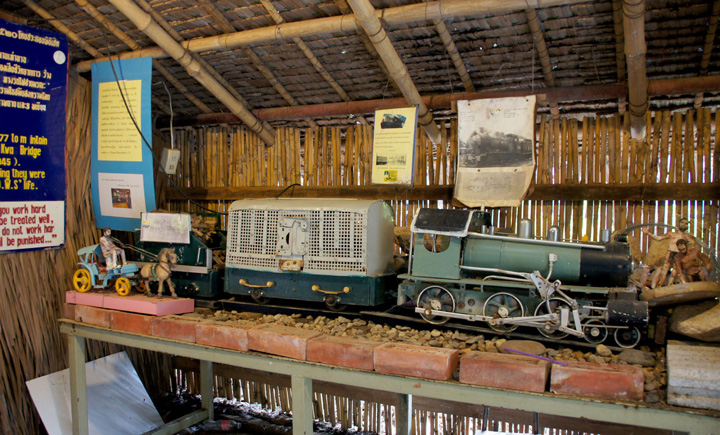
One building houses a diverse collection of objects primarily sourced from the Kanchanaburi region. These artifacts include items related to the Prisoner of War camps, bridge construction sites, and the railway itself. Visitors will encounter a range of exhibits, such as weapons, tools, uniforms, medals, and personal belongings, providing insights into the daily lives of both Allied and Japanese troops during the war.
Among the museum's notable exhibits is a 500-pound bomb, originally intended to be dropped on the railway bridge as a deterrent to halt Japanese construction efforts. However, the bomb failed to detonate and is now prominently displayed in the museum yard, serving as a powerful reminder of the past.
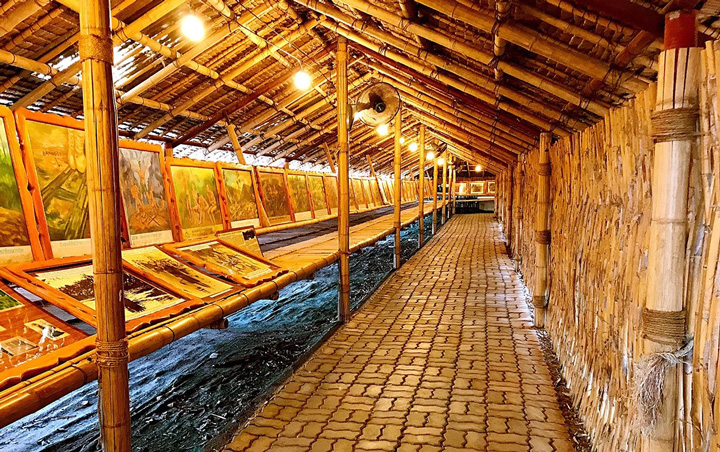
The other section of the museum features a collection of small bamboo huts, meticulously recreated to resemble the living quarters of prisoners of war. Within these huts, visitors can view a poignant display of photographs, paintings, and portraits depicting the harsh living conditions endured by the men. These visuals offer a glimpse into the challenging realities of daily life in the prison camps, including the meager food rations and the rampant diseases that plagued the incarcerated.
Location
Situated just west of the central area of Kanchanaburi, near the confluence of the Khwae Yai and Kwae Noi rivers, lies the JEATH War Museum. This location is approximately 4.5 km south of the renowned Bridge Over the River Kwai in western Thailand.
Conveniently positioned close to Kanchanaburi's city center, the JEATH War Museum is easily accessible on foot from the nearby bus station. If you are starting your journey from the Bridge over the River Kwai, which is located about 4.5 km to the southeast, it is advisable to arrange for transportation such as a taxi or bicycle, as the distance may be more suitable for motorized travel.
Opening Hours
JEATH War Museum opens daily from 8:30 AM to 4:30 PM.
Entrance fee
Entrance fee is 30 baht for foreigners.
Overall, the JEATH War Museum provides a powerful and immersive experience, allowing visitors to gain a deeper understanding of Thailand's wartime history, honor the memory of those who suffered, and reflect on the profound impact of war. It serves as a reminder of the importance of preserving history and promoting peace.
-
 Thailand to Luang Prabang via Huayxay border 18 Days
-
 Doi Inthanon National Park 3 Days 2 Nights
-
 Hill tribe treks To The Less Seen Area Of Chiang Mai 3 Days
-
 Short trip to Bangkok with your kid 5 days
-
 Cultural Connections from Singapore to Thailand 20D19N
-
 Thailand, Cambodia & Vietnam Border Crossing 15 Days