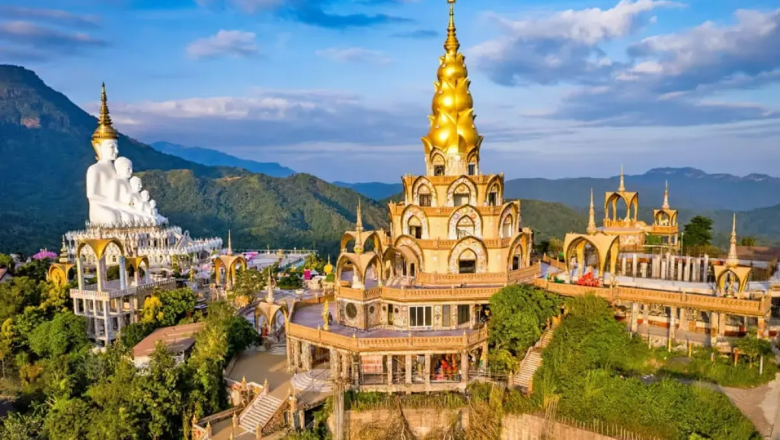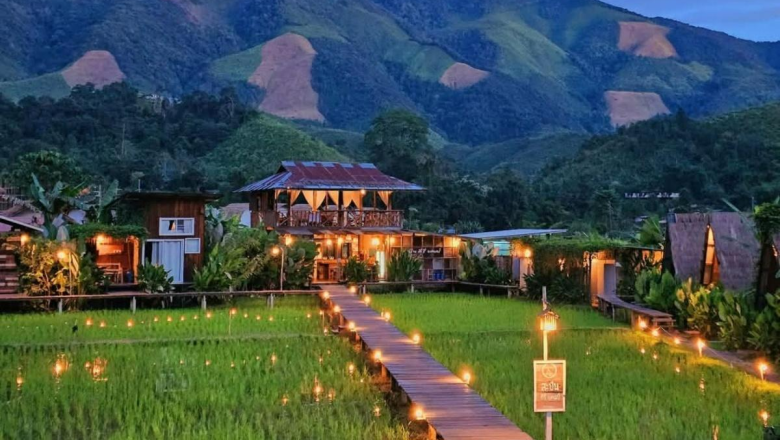
Chiang Rai is the northernmost province in Thailand and its capital city shares the same name. Bangkok is roughly 785 km to the south, and the city perches at about 580 meters above sea level, ringed by forested hills and the Kok River.
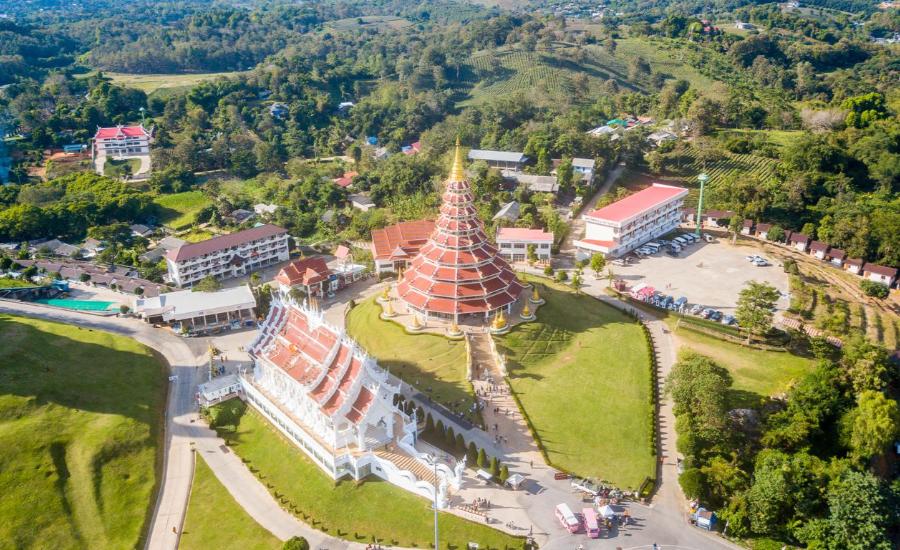
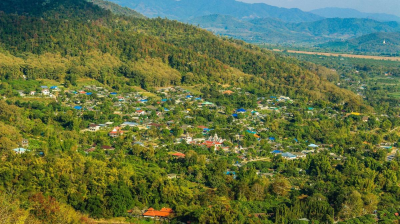
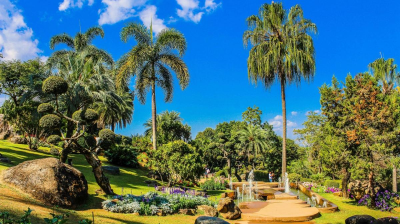
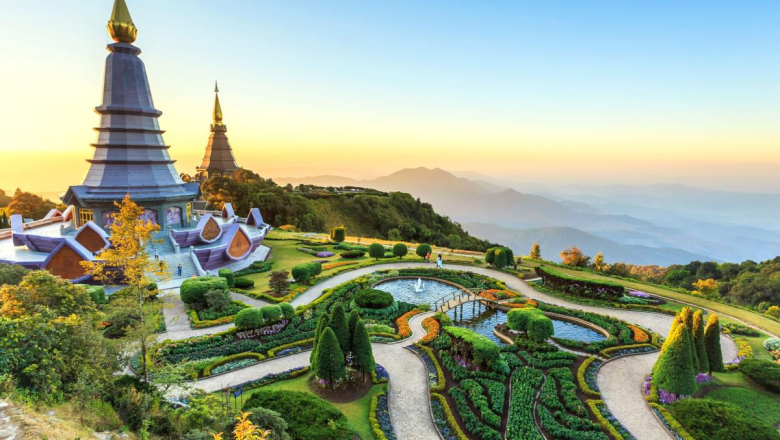
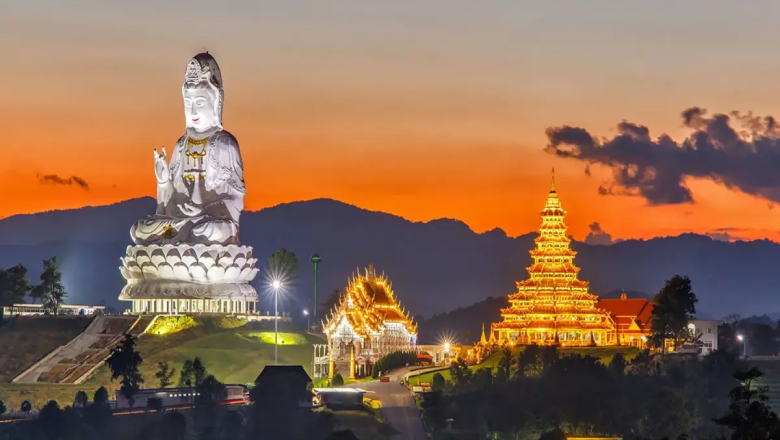
A breathtaking aerial view of the majestic temples in Chiang Rai
King Mengrai founded the city back in 1262, and for a time it served as the seat of the Lanna Kingdom before that role passed to Chiang Mai. These days, it is a laid-back place, easy to walk around, and quietly becoming known as a home for serious contemporary Thai art.
Why Is Chiang Rai Special?
Not many cities can claim two world-famous art landmarks within a few kilometers of each other. Chalermchai Kositpipat poured decades of his own money into Wat Rong Khun, the glittering White Temple, while Thawan Duchanee built the shadowy, bone-decorated Baan Dam Museum as its complete opposite. Both are unlike anything else you will find in Southeast Asia.
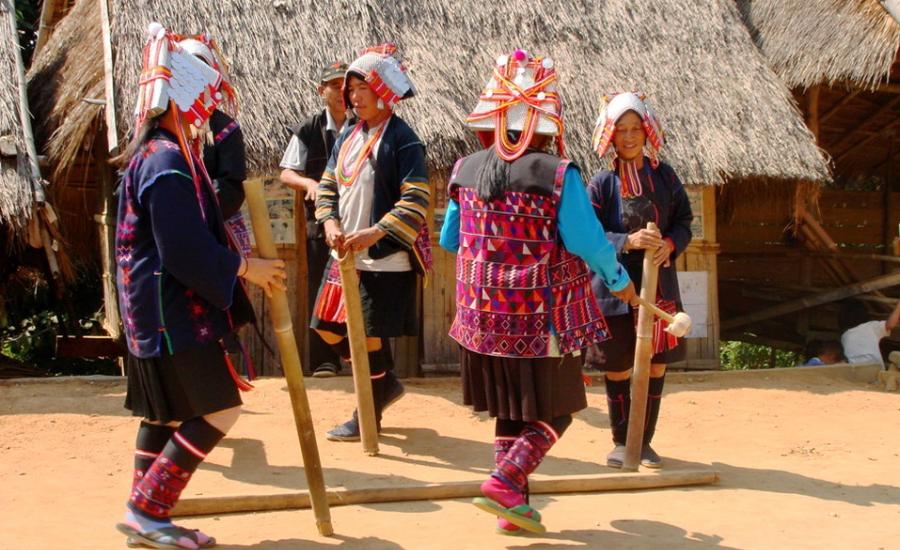
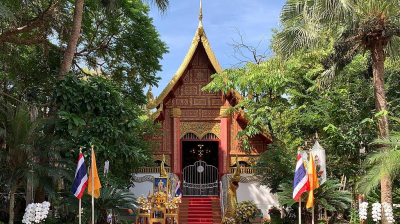
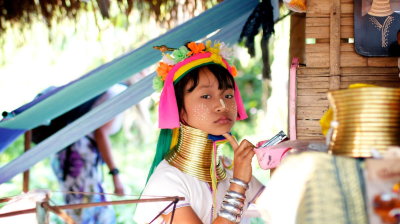
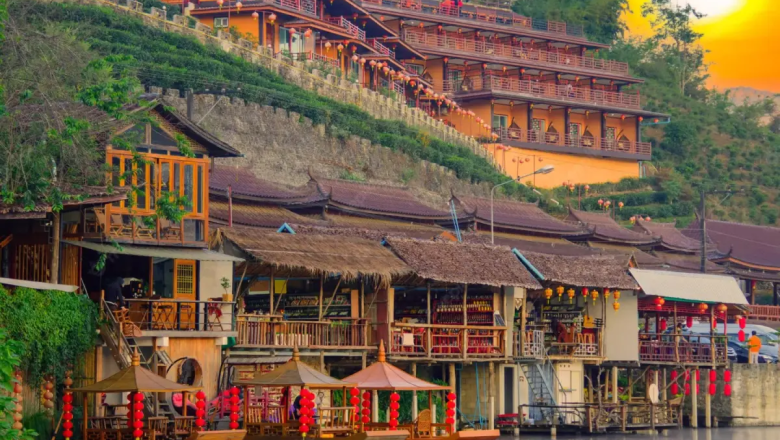
Traditional Lanna hill tribe culture
Then there is the geography. Chiang Rai touches the Golden Triangle, the spot where the Mekong River separates Thailand, Laos, and Myanmar. Factor in Lanna hill tribe culture, misty tea farms on Doi Mae Salong, and a night market scene that feels genuinely local, and the picture comes together fast.
When Is the Best Time to Visit Chiang Rai?
- November to February (Cool and Dry): Temperatures sit between 15°C and 28°C with low humidity and blue skies - perfect conditions for temple visits and trekking. This is the window most travelers aim for, and for good reason. Dry roads, clear views, and comfortable weather make it the most rewarding time to explore. This is simply the season we recommend most.
- March to May (Hot Season): The heat climbs to 35°C to 40°C and agricultural burning creates haze across the hills. Crowds thin out and prices drop. Songkran, the Thai New Year water festival, lands in mid-April.
- June to October (Rainy Season): Heavy afternoon showers roll in regularly, turning the hills vivid green. Some mountain roads become muddy or impassable. Visitor numbers are low and room rates reflect that.
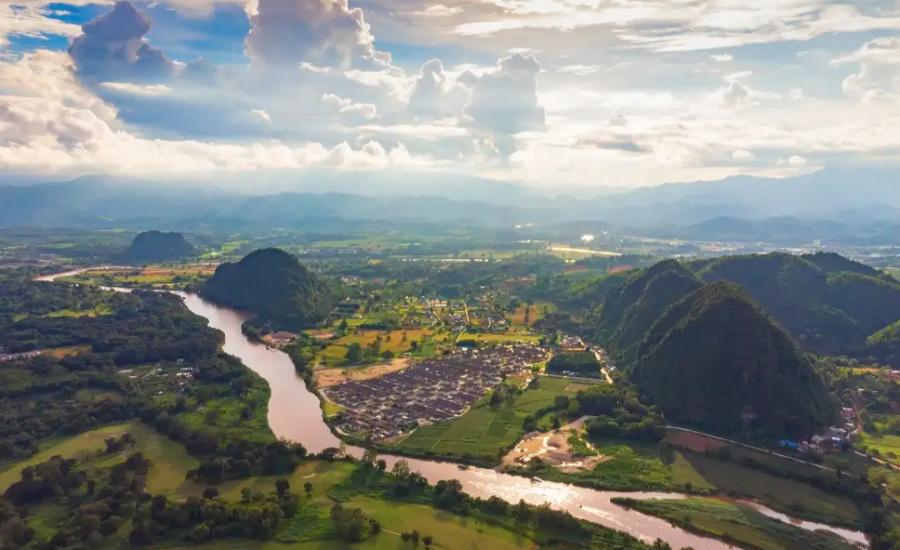
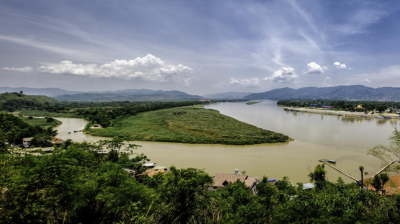
The serene Kok River winds through the lush landscapes
How Do You Get to Chiang Rai?
How to Get There?
- From Bangkok by air: Flights take around an hour and land at Mae Fah Luang - Chiang Rai International Airport (CEI). Bangkok Airways and AirAsia both run daily services.
- From Bangkok by bus: The journey runs 10 to 12 hours from Mo Chit terminal. Overnight buses are a decent option if you want to save on a night's accommodation.
- From Chiang Mai: Buses and minivans from Arcade Bus Terminal cover the distance in 3 to 3.5 hours. Driving yourself along Route 118 is a scenic alternative.
Combine this with a Chiang Mai trip.
How to Get Around Chiang Rai?
- Songthaew (red shared pickup trucks): the go-to for cheap, short hops around town
- Tuk-tuk: plentiful and good for quick trips, just agree on a price first
- Motorbike rental: 200 to 350 THB per day and the most flexible way to explore at your own pace
- Grab and local taxis: straightforward for city center travel, especially useful at night
- Private driver: for the White Temple, Blue Temple, and Black House in a single run, hiring a driver for 1,200 to 1,500 THB is hard to beat
Route tip: White Temple to Blue Temple is about 6 km; Blue Temple to Black House adds another 8 km. You can loop all three in a comfortable half-day.
What Are the Top Experiences in Chiang Rai?
Wat Rong Khun (White Temple)
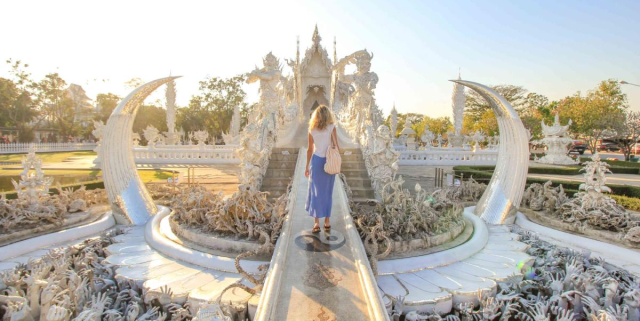
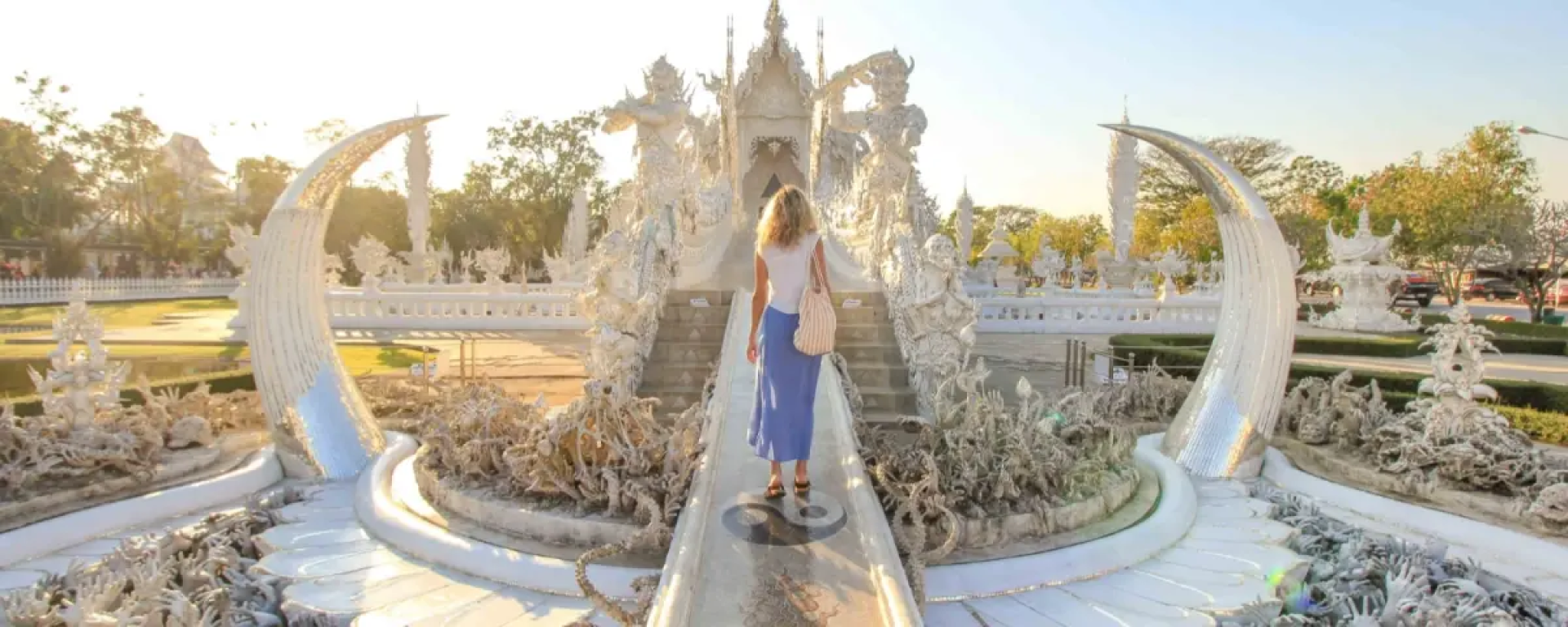
Covered head to toe in white plaster and mirror fragments, Wat Rong Khun catches the light in a way that makes it look almost unreal. The artist Chalermchai Kositpipat built it as a personal offering to the country, and work is still ongoing decades later. It sits about 13 km south of the city, opens daily at 8:00 AM and closes at 5:00 PM, and costs 200 THB to enter.
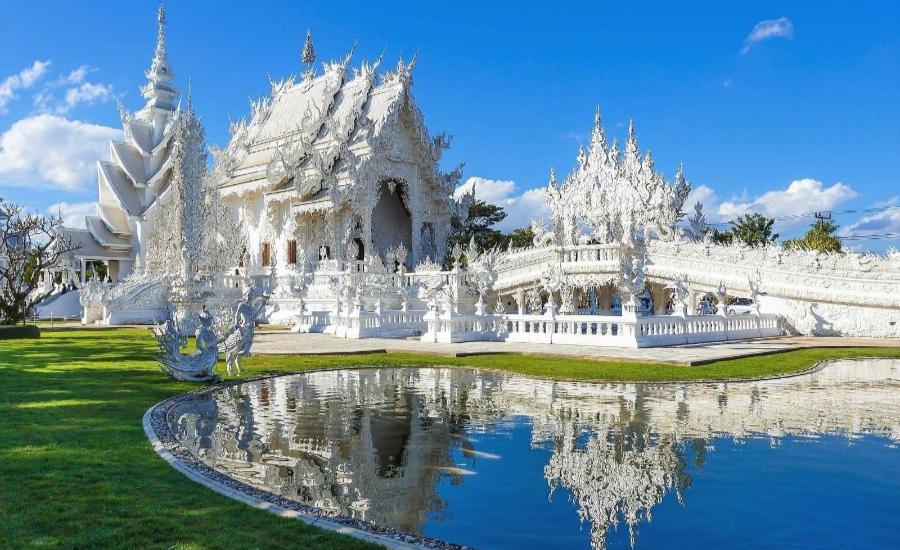
The iconic White Temple, a masterpiece of contemporary Thai art in Chiang Rai
Wat Rong Suea Ten (Blue Temple)
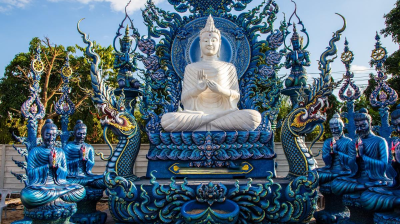
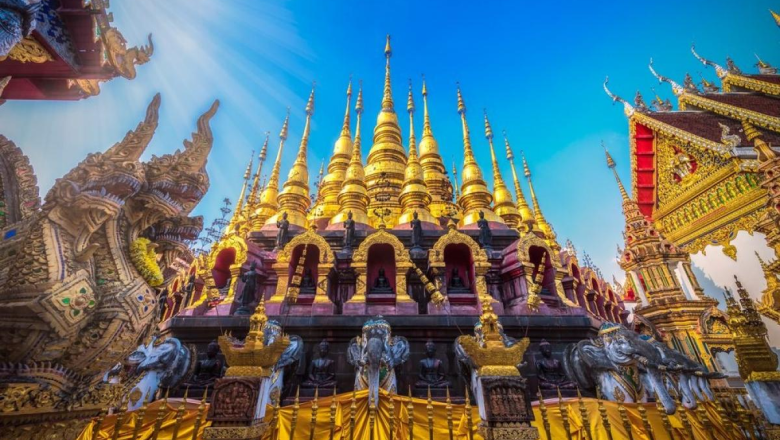
The Blue Temple does not get the same crowds as the White Temple, which is honestly part of what makes it worth visiting. Rich cobalt tiles, gold detailing, and a ceiling painted in swirling patterns make the interior genuinely breathtaking. Admission is free. It is about 4 km from the city center and opens from 7:00 AM to 8:00 PM daily.
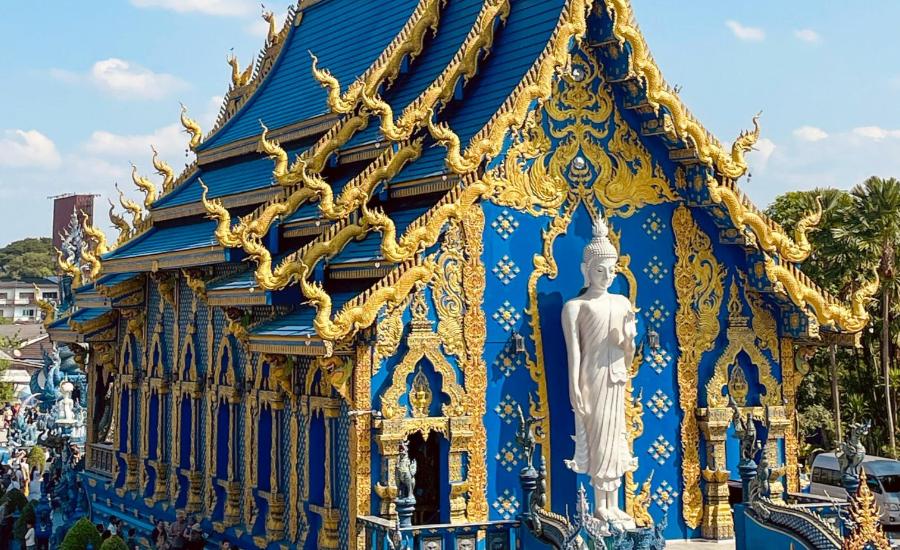
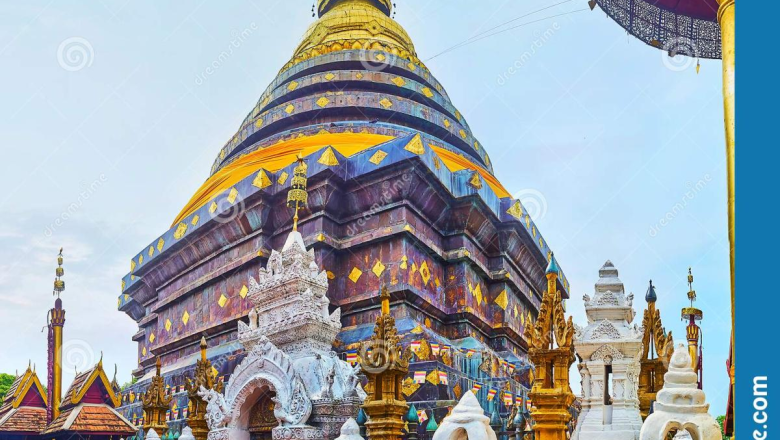
Vibrant gold and cobalt blue details at the famous Blue Temple
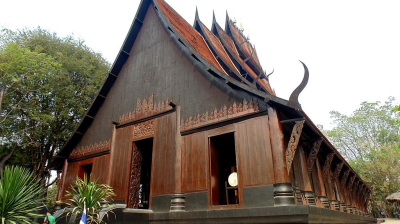
Baan Dam Museum (Black House)
If the White Temple is light, Baan Dam is pure shadow. Artist Thawan Duchanee filled a compound of more than 40 traditional Lanna structures with animal hides, dark timber, carved bones, and confrontational sculpture. It takes time to sit with, but it stays with you. Entry is 80 THB. Open Tuesday to Sunday, 9:00 AM to 5:00 PM, about 12 km north of town.
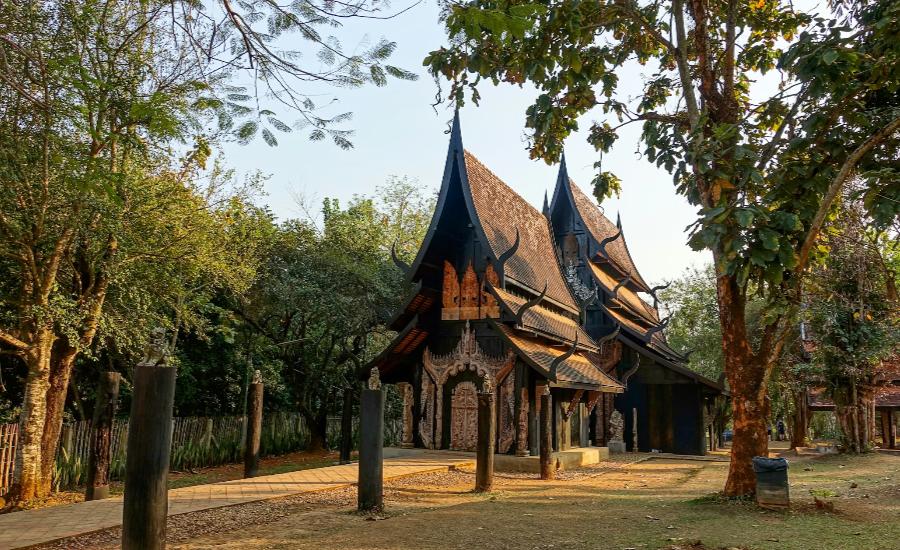
Exploring the dark and mysterious architecture of the Black House
Golden Triangle and Doi Mae Salong Tea Plantations
Standing at the Golden Triangle and looking out over the Mekong where three countries share a border is one of those moments that earns its place on any itinerary. You can take a short boat ride, step inside the Hall of Opium for context on the region's complicated past, or just sit and take in the view. From there, the winding drive up to Doi Mae Salong reveals rows of tea bushes, oolong tasting rooms, and mountain air that feels a world away from the coast. Our Golden Triangle Day Trip guide covers it in detail.
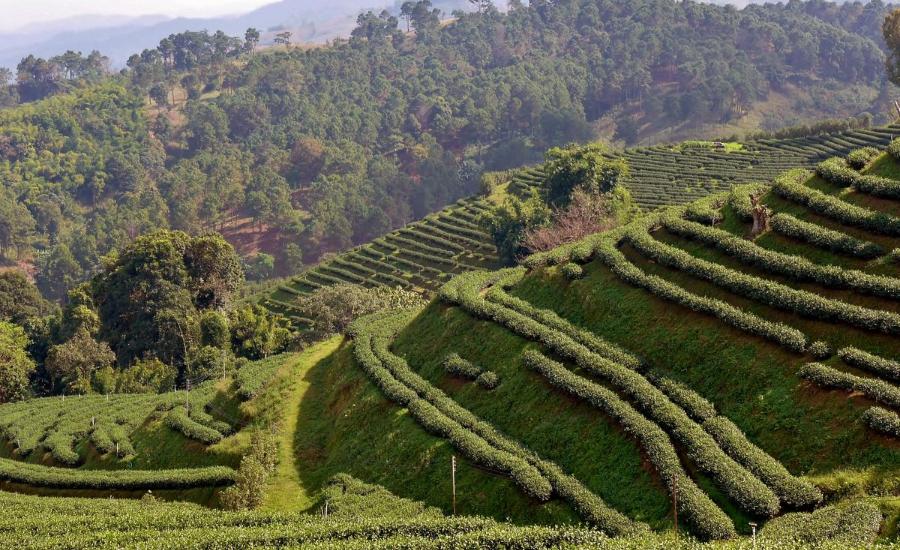
Endless green terraces at the Doi Mae Salong
What Should You Eat in Chiang Rai?
- Sai oua: coarsely ground pork sausage packed with lemongrass, galangal, and kaffir lime leaf, then grilled slowly over charcoal until the skin blisters
- Khao kan jin: sticky rice steamed with pork blood into a savory, dense cake, most commonly found at early morning markets
- Nam prik ong: a thick, russet-colored chili dip made from minced pork and tomatoes, eaten with raw vegetables and crispy pork rinds
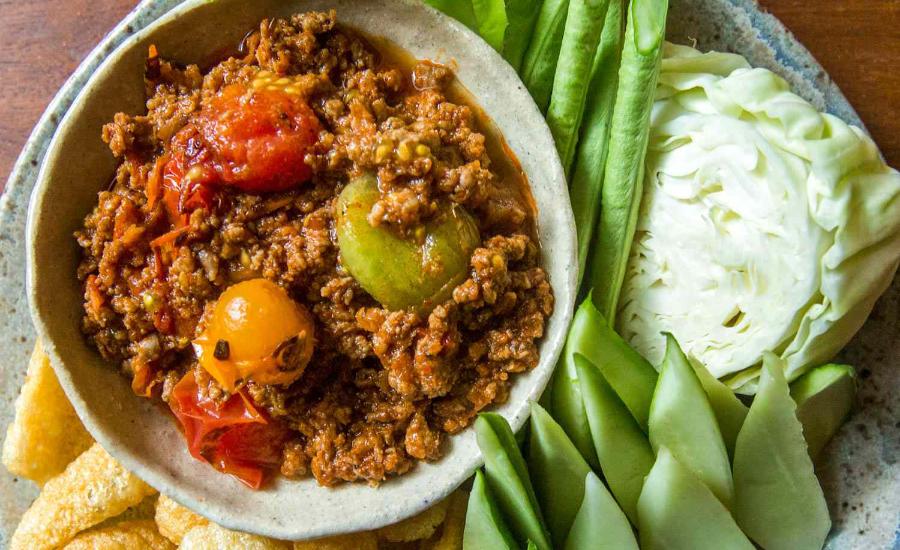
Tasting the authentic flavors of Nam Prik Ong
For evening meals, the Night Bazaar food stalls are the easiest starting point. Lab Sanam Keela does solid northern Thai cooking, and Lu Lam by the Kok River is worth a stop for the setting alone.
Where Should You Stay in Chiang Rai?
- Luxury: Le Meridien Chiang Rai Resort sits along the river with a large pool and spa, starting around 3,500 THB a night. Anantara Golden Triangle Elephant Camp and Resort is right at the three-country border and begins around 10,000 THB.
- Mid-range: Mora Boutique Hotel is well-placed in the city and consistently gets good reviews, from about 1,200 THB. The Riverie by Katathani has a rooftop bar and river views, starting around 1,800 THB.
- Budget: The cluster of small guesthouses near Jedyod Road in the old town offers simple, clean rooms from 300 to 600 THB a night.
How Much Does a Trip to Chiang Rai Cost?
- Entrance fees: White Temple (Wat Rong Khun): 200 THB; Black House (Baan Dam Museum): 80 THB; Blue Temple (Wat Rong Suea Ten): Free; Hall of Opium at the Golden Triangle: 200 THB
- Motorbike hire: 200 to 350 THB per day
- Street food plate: 40 to 80 THB; a sit-down restaurant meal runs 150 to 350 THB
- Traveling on a budget: roughly 700 to 1,200 THB per day covers a guesthouse, street food, and songthaews
- Mid-range comfort: 2,000 to 4,000 THB per day for a decent hotel, restaurant meals, and Grab rides
FAQ for traveling in Chiang Sean
Do I need to dress a certain way for the temples?
Yes, and it is non-negotiable at most sites. Shoulders and knees need to be covered. Pack a light cardigan or scarf rather than counting on the sarongs sometimes handed out at entrances.
What is the best time of day to visit the White Temple?
Go before 9:00 AM if you can manage it. The morning light bounces off the mirror fragments beautifully, and the coach groups have not yet arrived. By midday, it is both crowded and very hot.
Can I visit Chiang Rai as a day trip from Chiang Mai?
Technically possible, but you will spend most of the day traveling. A single overnight stay changes the experience completely and lets you catch the Night Bazaar and squeeze in the Golden Triangle without feeling rushed.
Is Chiang Rai safe for solo travelers?
Very much so. It has a calm, unhurried atmosphere and most visitors have no issues. The usual common sense applies at busy markets, and remote hilltribe treks are better done through a reputable local guide.
Are there ATMs in Chiang Rai?
Plenty in the city center, though coverage gets thinner the further you go into the hills. Wi-Fi in hotels and cafes is generally solid; mobile data works well in town but weakens on mountain roads.
Chiang Rai Travel Tips
- Sort your outfit before leaving the hotel on temple days. Sleeveless tops and shorts will get you turned away at the entrance.
- Aim to be at the White Temple and Black House by opening time or in the last hour of the day. The difference in crowd levels compared to midday is significant.
- If you are in Chiang Rai on a Saturday, the Walking Street on Thanalai Road is genuinely one of the better night markets in the north. Worth planning around.
- Renting a motorbike? Bring your international driving permit. Checkpoints near the Golden Triangle area do check, and a fine is the last thing you want.
- Grab a local SIM at the airport or from any 7-Eleven. DTAC and AIS both work well across the province.
- Doi Mae Salong is worth the early start. Mist sits in the valley between the tea rows for only a short window each morning, and the drive takes about 1.5 hours from the city.
Plan your trip with the best activities in Chiang Rai.
Conclusion
Chiang Rai has things you genuinely cannot find anywhere else in Thailand: Kositpipat's obsessive White Temple, Duchanee's dark and theatrical Black House, mountain tea country, and a Mekong River border crossing that carries centuries of history. If you are building a northern Thailand trip, Chiang Rai slots in perfectly alongside Chiang Mai and Bangkok.
Ready to experience the artistic wonder of Chiang Rai? Book your trip now and create unforgettable memories in Northern Thailand!