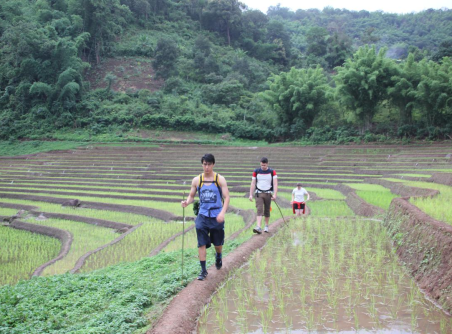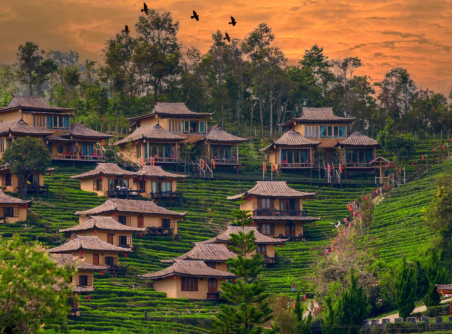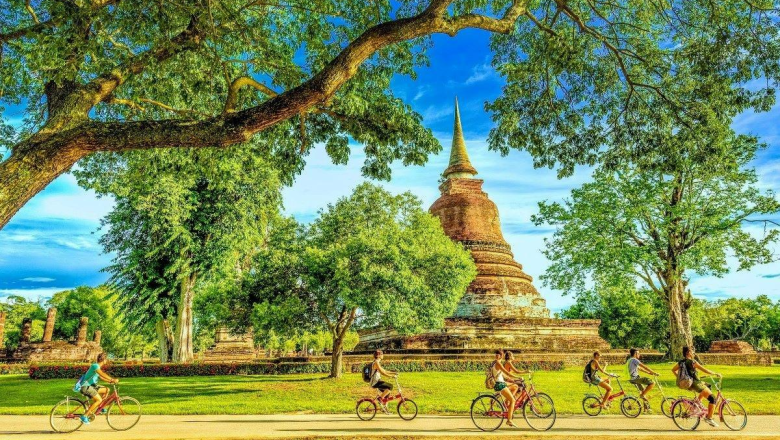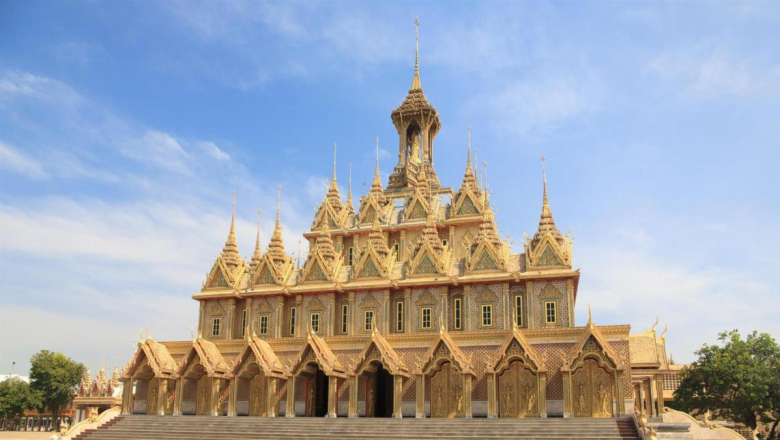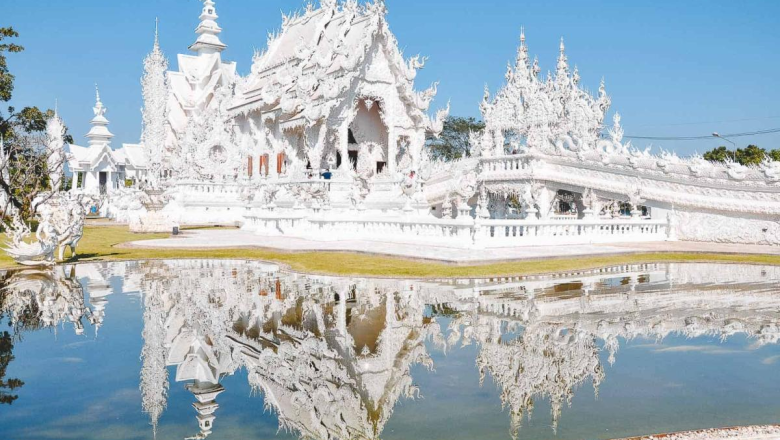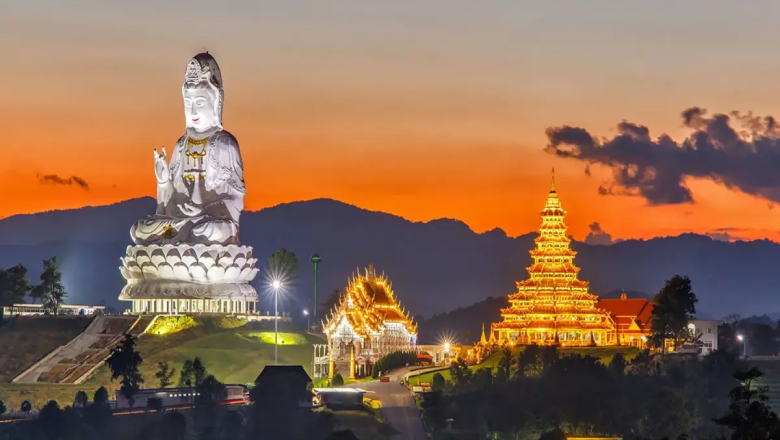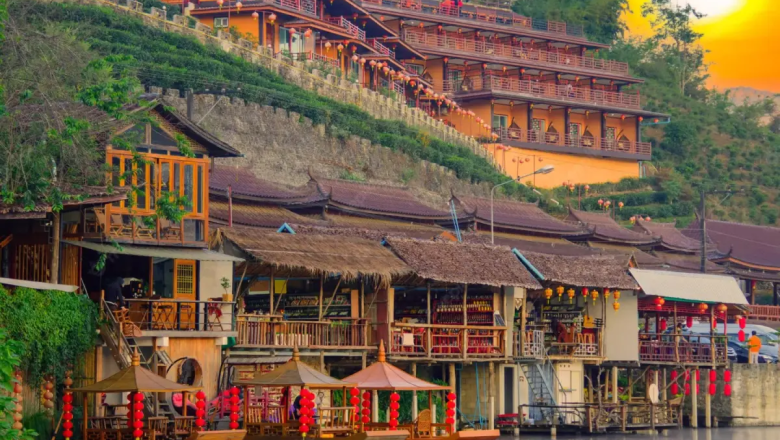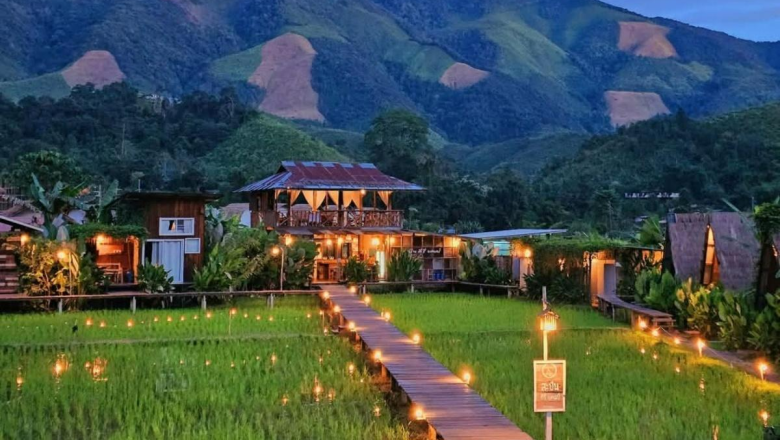
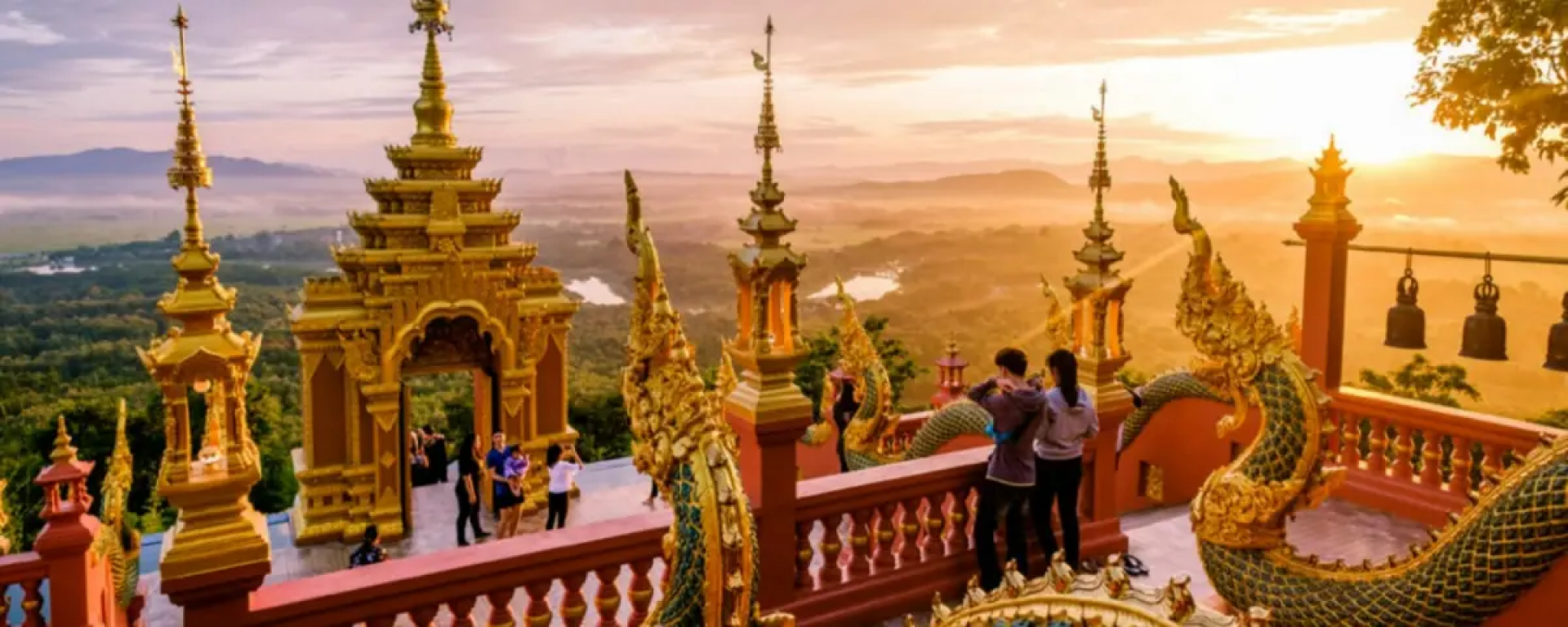
Located in Northern Thailand near Chiang Mai, Lampang sits in a broad river basin shaped by mountains. This serene town is one of the region’s most well-preserved Lanna cities. Lampang moves at a slower pace, with everyday life shaped by riverside communities and enduring cultural practices. Join Thai Unika to uncover Lampang’s authentic beauty.
Why is Lampang special?
Located in Northern Thailand, Lampang is a plateau with high mountain ranges stretching from north to south and a river basin in the center of the province. It is home to one of the longest and widest inland basins in the region, known as the “Lampang Reservoir".

A glimpse into Lampang’s landscapes
The province holds strong historical and cultural value as part of the former Lanna Kingdom. This influence shows in its temples and traditional teakwood buildings, which date back several centuries. Lampang is Thailand’s ceramics capital because of its high-quality white clay and decades of skilled craftsmanship.
Lampang is known for its horse-drawn carriage transport, one of the very few places in Thailand where this traditional mode of travel is still actively used today. Lampang is also home to Thailand’s leading elephant conservation center, dedicated to the care and protection of these animals. It serves as a key site for rehabilitation, education, and ethical elephant tourism in Northern Thailand.
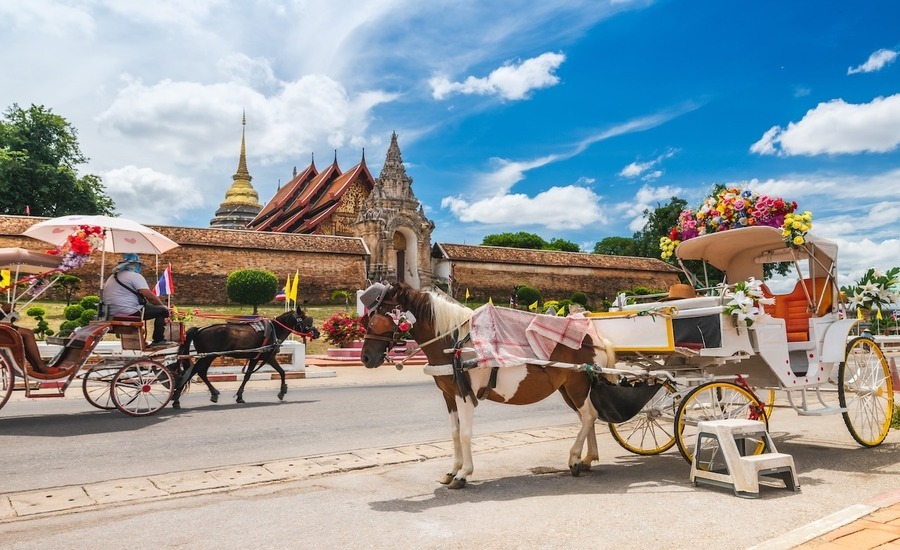
Horse-drawn carriages remain a unique and living tradition in Lampang
The culturally rich city is often called the “City of Roosters,” based on a local legend of a white rooster believed to be a god in disguise. Today, you can spot rooster symbols all over Lampang.
Top Attractions in Lampang
Wat Phra That Lampang Luang
Wat Phra That Lampang Luang is one of the most important and well-preserved Lanna temples in Northern Thailand. Located about 18 kilometers from the city center, the temple dates back to the 13th century and is set on a small hill, enclosed by ancient brick walls.
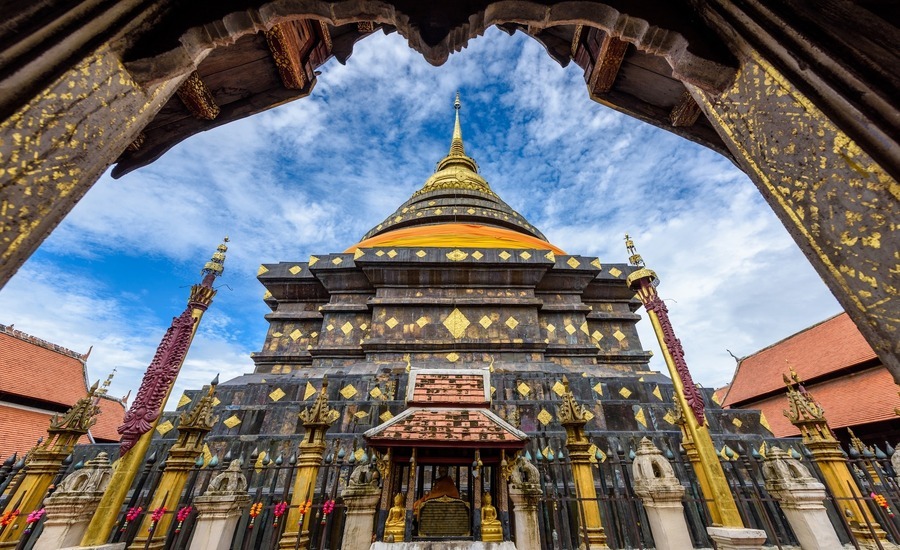
Wat Phra That Lampang Luang is one of Thailand's most beautiful temples
Visitors can explore the temple grounds on foot, passing through wooden halls, quiet courtyards, and walkways in Lanna design. The atmosphere is calm and less crowded than major temples in the region, so tourists can fully relax and immerse themselves in the experience.
Learn how to plan the ideal Thailand trip here: Top 8 Thailand Travel Tips First-Time Travelers Should Know
Thai Elephant Conservation Center
The Thai Elephant Conservation Center is the main institution in Thailand dedicated to the care and preservation of Asian elephants. Located around 30 kilometers from Lampang city, it has operated for decades and plays an important role in protecting and rehabilitating elephants.
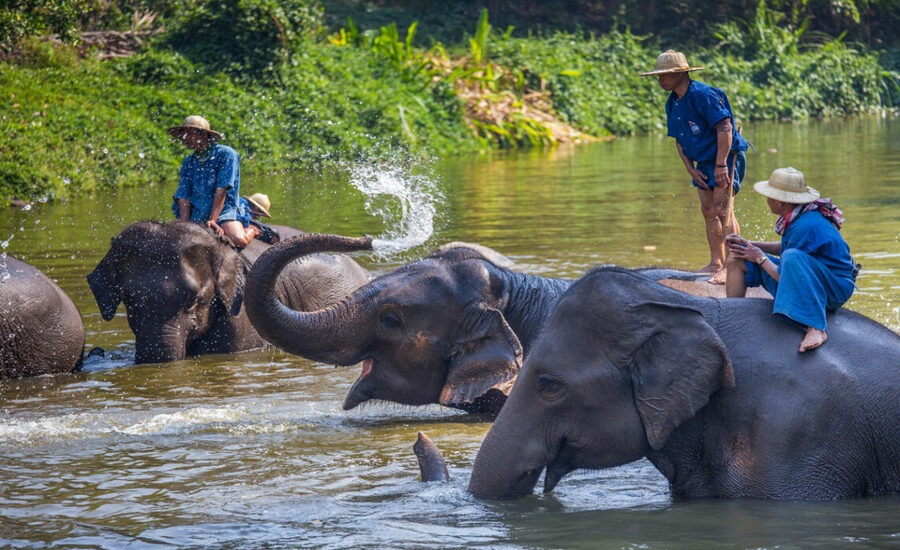
Lampang is home to one of Thailand’s most important elephant conservation centers
Visitors can observe daily care routines, learn about elephant behavior, and explore facilities such as the elephant hospital and nursery. The center offers an educational experience while promoting responsible and ethical elephant tourism. It is both an educational and ethical place to understand the role of elephants in Thai history and modern conservation.
Chae Son National Park
Chae Son National Park offers a quieter side of Lampang, where mountains, forests, and natural hot springs come together. Located about 70 kilometers from the city, it feels more relaxed and less visited than many parks in Northern Thailand.
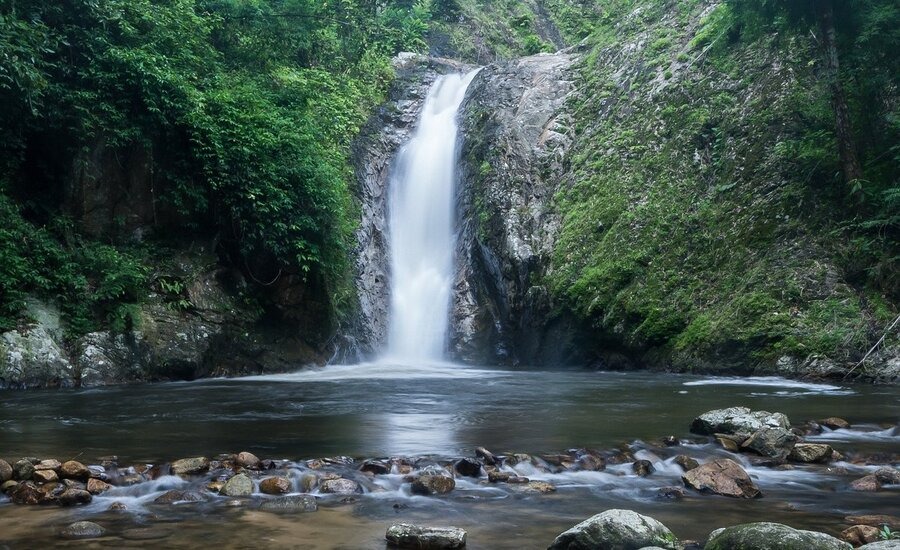
Natural hot springs and waterfalls at Chae Son National Park, Lampang
A typical visit here is slow and simple. You can sit by the hot springs, try boiling eggs in the mineral water, then walk along short trails to reach the multi-level waterfall. It’s an easy escape into nature without needing a full-day trek.
Dhanabadee Ceramic Museum
Dhanabadee Ceramic Museum tells the story of Lampang’s ceramics industry, which has developed over decades thanks to the province’s rich white clay resources. It is best known for the iconic rooster bowls, a familiar symbol found across Thailand.
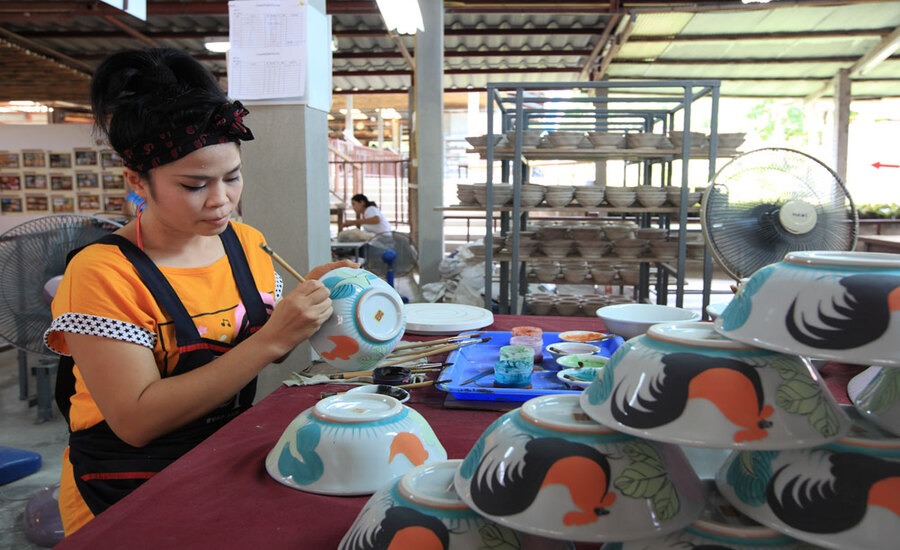
Lampang’s ceramics heritage at Dhanabadee Ceramic Museum
A visit here is both simple and hands-on. You can walk through the production areas, see how each piece is made, and try painting your own ceramics. It offers a closer look at a craft that continues to shape Lampang’s local identity.
Kad Kong Ta Walking Street
Kad Kong Ta Walking Street offers a more lively side of Lampang, set along the Wang River and lined with rows of old wooden houses. The area shows a blend of Lanna, Chinese, and Burmese influences, which give it a distinct character that feels both historic and local.
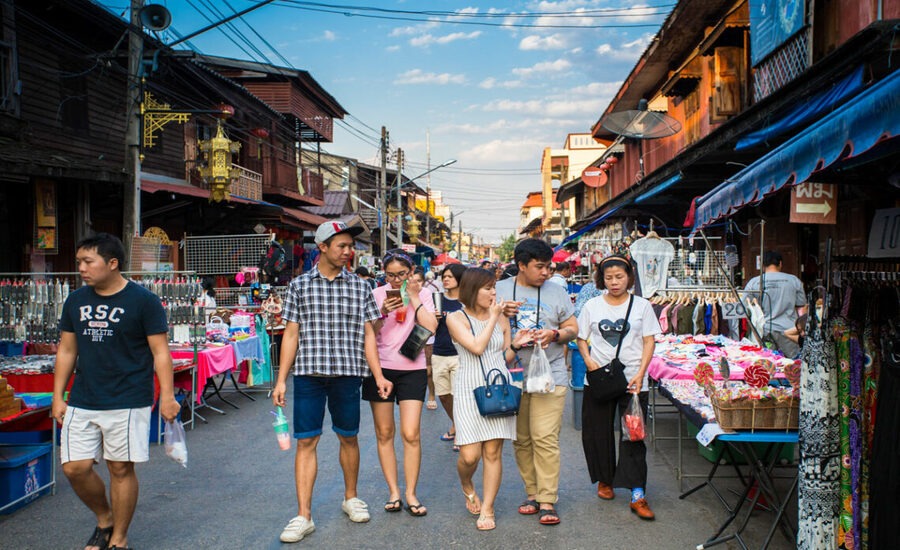
Daytime at Kad Kong Ta Walking Street, Lampang
As evening sets in, especially on weekends, the street gradually fills with food stalls, small shops, and local vendors. You can walk at a relaxed pace, try a variety of street food, and browse handmade goods while the neighborhood comes to life with music and conversation.
Explore more of Northern Thailand here: Northern Thailand tours
Where to Eat in Lampang?
Lampang’s food reflects traditional Lanna Thai cuisine, known for its rich, savory, and slightly smoky flavors. Alongside these are simple street food staples that are part of everyday local life. Besides Kad Kong Ta Walking Street, you’ll find a range of local spots that capture this experience.
Mae Hae
Mae Hae is one of the most well-known local spots for traditional Northern Thai food, with over 50 years of history. The menu focuses on classic Lanna dishes like gaeng hang lay and nam prik, prepared in a rich and straightforward style that reflects original local flavors.
The setting is simple and local, often busy during peak hours. It’s a place where you can sit down, pick a few dishes, and experience Lampang’s food the way locals do.
Address: 1017 Upparaj Alley, Suan Dok, Mueang Lampang District, Lampang, Thailand
Opening Hours: Daily, 10:00 AM - 7:30 PM
Khao Gaeng Im Aroy
Khao Gaeng Im Aroy is a typical rice-and-curry shop where you can choose from a variety of ready-made dishes. The selection usually includes curries, stir-fries, and simple local dishes, making it easy to try multiple flavors in one meal.
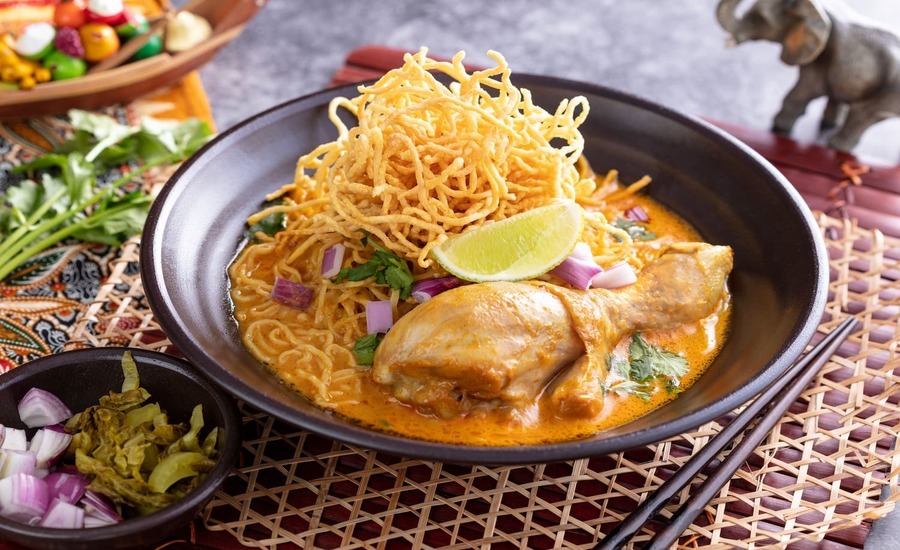
Lampang is an ideal spot to get an authentic taste of Lanna cuisine
The experience is quick and casual, with a steady flow of locals stopping by. It’s a good option if you want something affordable and representative of everyday eating in Lampang.
Address: Near Withaya School, Airport Road, Hua Wiang, Lampang, Thailand
Opening Hours: Daily, 3:00 PM - 8:00 PM
Aroy One Baht
Aroy One Baht is known for its budget-friendly street food, especially skewers and small grilled items. The menu is simple but varied, with plenty of quick bites that make it easy to try different things in one stop.
It’s more of a walk-and-eat experience, especially in the evening when the area gets livelier. This is a good place to grab something quick while exploring the city.
Address: 297 Tipchang Road, Mueang Lampang District, Lampang 52000, Thailand
Opening Hours: Daily, 4:00 PM - 11:00 PM
What is the best time to visit Lampang?
The best time to visit Lampang is during the cool season from November to February, when temperatures range between 20 and 30°C. The weather is more comfortable for exploring temples and visiting outdoor attractions without the intense heat. From March to May, Lampang enters the hot season, with temperatures often rising above 35°C. While travel is still possible, outdoor activities can feel more tiring, especially during the daytime.
The rainy season from June to October brings occasional showers, but it also makes the surrounding landscapes greener and more refreshing. This period is less crowded, so it’s not a bad option if you prefer a quieter travel experience.
How to get to Lampang?
By Air
The fastest way to reach Lampang is by flying from Bangkok to Lampang Airport. The flight takes around 1 hour and 15 minutes, followed by a short transfer to the city center. This is the most convenient option if you want to save time.
By Train
Lampang is located along Thailand’s northern railway line, so train travel will be a scenic and comfortable option. Trains run from Bangkok and Chiang Mai, with travel times ranging from 2 to 10 hours depending on the route and service type.
By Bus or Car
Buses and private cars offer a flexible and budget-friendly way to reach Lampang. Regular routes operate from Chiang Mai (2-3 hours) and Chiang Rai (4-5 hours). This option is ideal if you are already traveling within Northern Thailand.
Travelling Costs in Lampang
Accommodation
- Budget dorms or basic guesthouses: 150-350 THB ($4-10 USD) per night
- Mid-range hotels: 600-1,800 THB ($17-50 USD) per night
- Luxury stays: 2,000-3,500 THB ($55-100+ USD) per night
Transportation
- Budget songthaew or tuk-tuk: 20-50 THB ($0.5-1.5 USD) per short trip
- Mid-range: 100-300 THB ($3-8 USD) for longer rides or private transfers
- Flexible option: 150-300 THB ($4-8 USD) per day for motorbike rental
Food
- Budget food stalls: 50-120 THB ($1.5-3.5 USD) per meal
- Mid-range local restaurants: 120-300 THB ($3-8 USD) per meal
- Higher-end dining spots: 300-600 THB ($8-17 USD) per meal
Entrance Fees
- Temples and local sites: Free - 50 THB ($0-1.5 USD)
- Museums and parks: 50-150 THB ($1.5-4 USD)
- Special attractions or guided experiences: 150-300 THB ($4-8 USD)
FAQs about Lampang
Is Lampang safe for tourists?
Yes, Lampang is considered a safe destination for travelers. It is a quieter city compared to major tourist hubs, with a relaxed atmosphere and low crime rates. As with any destination, basic precautions are recommended, especially at night or in less crowded areas.
How long should a trip to Lampang be?
A stay of 2 to 3 days is usually enough to explore Lampang’s main attractions, including temples, local markets, and nearby nature spots. If you prefer a slower pace or plan to visit surrounding areas, you can extend your trip to 3–4 days.
What should you pack for Lampang?
Light and breathable clothing is recommended due to the warm climate. If visiting temples, bring modest clothing that covers shoulders and knees. Comfortable walking shoes, sunscreen, and a reusable water bottle are also useful for daily travel.
Are ATMs and WiFi available in Lampang?
Yes, ATMs are widely available in the city, especially in central areas. WiFi is accessible in most hotels, cafes, and restaurants, although the speed may vary in more rural areas.
Conclusion
If you are planning a journey through Northern Thailand or looking to step away from the usual routes, Lampang offers a quieter kind of experience. It is a place where daily life moves at its own pace, authentic and grounded.
Start planning your trip with curated experiences by Thai Unika Travel and discover how Lampang can fit into your journey across Northern Thailand.
Your ideal Lampang and Northern Thailand itinerary starts here: Northern Thailand Adventure 11 Days