
- Famous Buddha Statues in Thailand You Should Visit
- Frequently Asked Questions (FAQs)
- Can tourists visit these Buddha statues freely?
- What is the best time of day to visit Buddha statues?
- What should I wear when visiting Buddha statues in Thailand?
- Is it okay to take photos of Buddha statues?
- Is it okay to touch a Buddha statue?
- Is a guide necessary to understand the significance of these statues?
- Conclusion
In Thailand, Buddhism is a part of everyday life. Not only in sacred places like temples, but also Buddha statues in Thailand are seen almost everywhere. Varying in size, posture, and material, these statues reflect deep spiritual meaning and rich artistry. Join Thai Unika to gain a closer look into Thailand’s religious wonders.
Famous Buddha Statues in Thailand You Should Visit
Five-Buddha Statue at Wat Phra That Pha Kaew
Established as a religious site in 2004 and officially becoming a temple in 2010, Wat Phra That Pha Kaew is located in Phetchabun province. It is a peaceful center for meditation with green hills and breathtaking mountains. The temple’s colorful design makes it one of the most visually striking in Thailand.
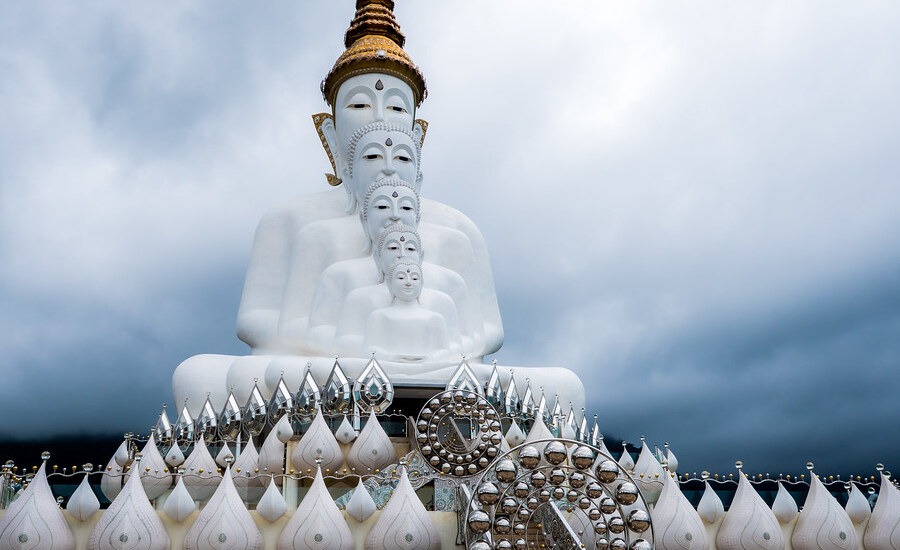
The Five-buddha Statue wrapped in clouds
The highlight is the stunning white five-Buddha statue, sitting poignantly on a lotus pedestal, decreasing in height from front to back. The largest Buddha has a golden head and body details, while the others remain mostly pure white. Clouds often drift close to the statues, creating a magical, almost ethereal atmosphere.
Great Buddha at Wat Muang
Wat Muang in Ang Thong province is home to one of the biggest Buddha statue in Thailand and the ninth-largest statue in the world. The 92-meter massive seated Buddha can be seen from far away, rising impressively over the flat countryside. Besides its size, the bright golden color makes a powerful first impression. The statue is incredible both as a religious icon and an engineering achievement.
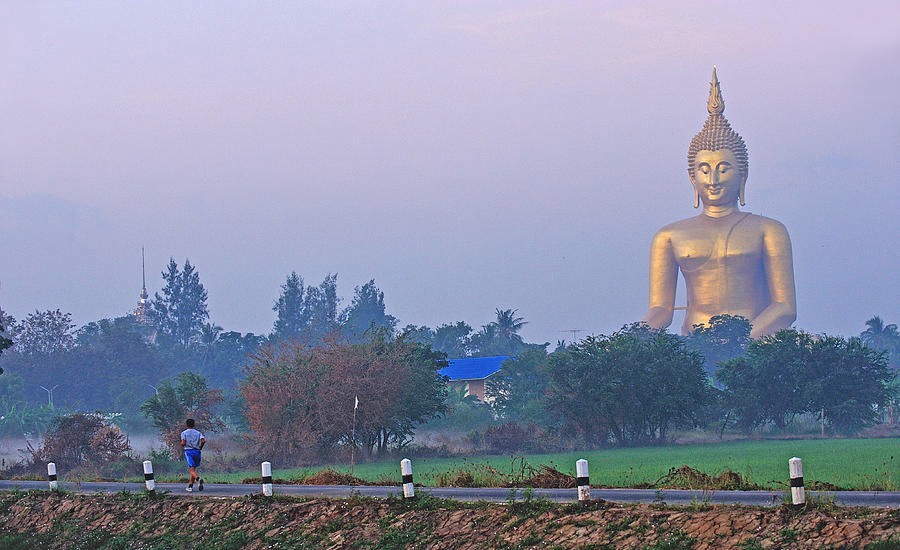
The Great Buddha rising from Wat Muang’s sky
Beyond the main Buddha, the temple also offers more to explore. Visitors will find large Naga statues and striking displays that depict Buddhist hell. These unusual sculptures add a dramatic contrast to the peaceful Buddha image.
Buddha Head in Tree Roots at Wat Mahathat
This iconic Buddha head is located in Ayutthaya Historical Park, a UNESCO World Heritage Site. Many Buddha statues were damaged and their heads removed during the Burmese attack on Ayutthaya. One head remained, and over time, the roots of a banyan tree gradually embraced it. This has become one of the most iconic sights in the historic city and one of the most famous Buddha statues in Thailand.
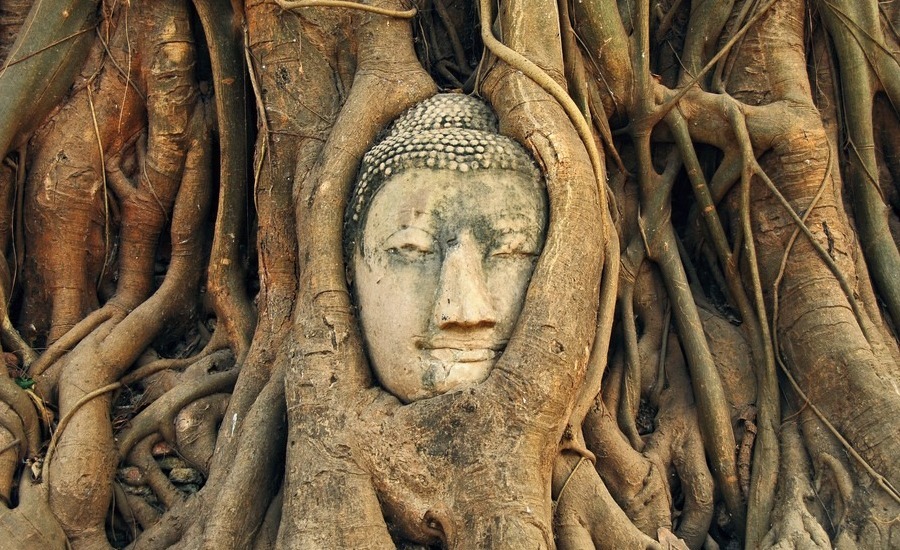
The 700-year-old Buddha head is hidden among tree roots
Visitors are asked to show respect by sitting or kneeling when taking photos. The surrounding ruins give a glimpse into Ayutthaya’s former glory. It’s best visited early to avoid crowds. This stop is ideal for history and photography lovers.
Reclining Buddha at Wat Pho
When it comes to temples, Wat Phra Kaew is usually the first name in people’s minds. But little do they know Wat Pho - the neighboring temple, is also a hidden gem. Wat Pho is best known for its Reclining Buddha. The golden statue measures 46 meters long and represents the Buddha entering parinirvana, the state of nirvana after death, making it one of the most unique Buddha statues in Thailand.
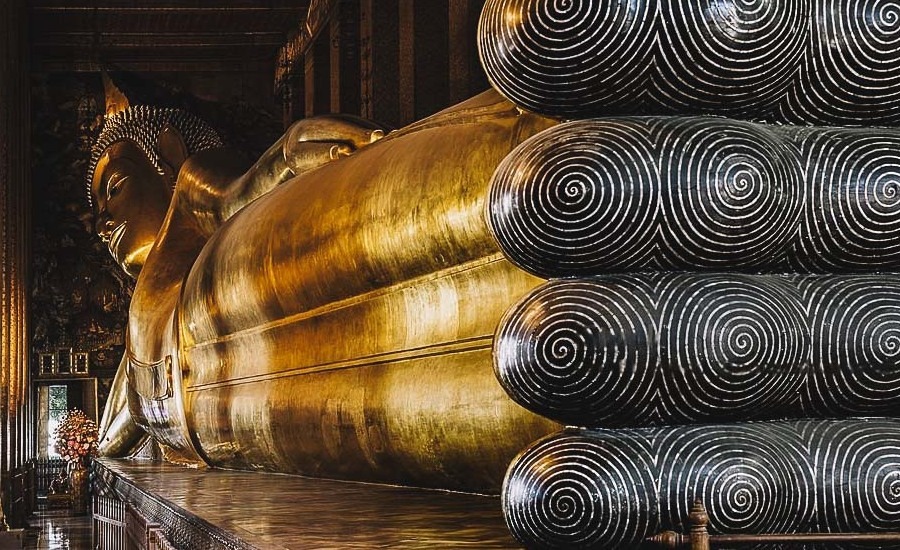
Reclining Buddha lying on a pedestal at Wat Pho
The soles of the Buddha’s feet are decorated with 108 symbolic designs in mother-of-pearl. Wat Pho is also known as the birthplace of traditional Thai massage. Located near the Grand Palace, it’s easy to include in an itinerary in Bangkok.
Suggested for You: Grand Palace & Wat Pho half day
Hilltop Buddha at Tiger Cave Temple in Krabi
Tiger Cave Temple, or Wat Tham Suea, is one of Krabi’s most challenging yet rewarding attractions. The giant golden Buddha statue in Thailand sits at the top of a hill reached by climbing over 1,247 steps. The climb is tough but popular with adventurous travelers. Along the way, there are resting points and scenic views.
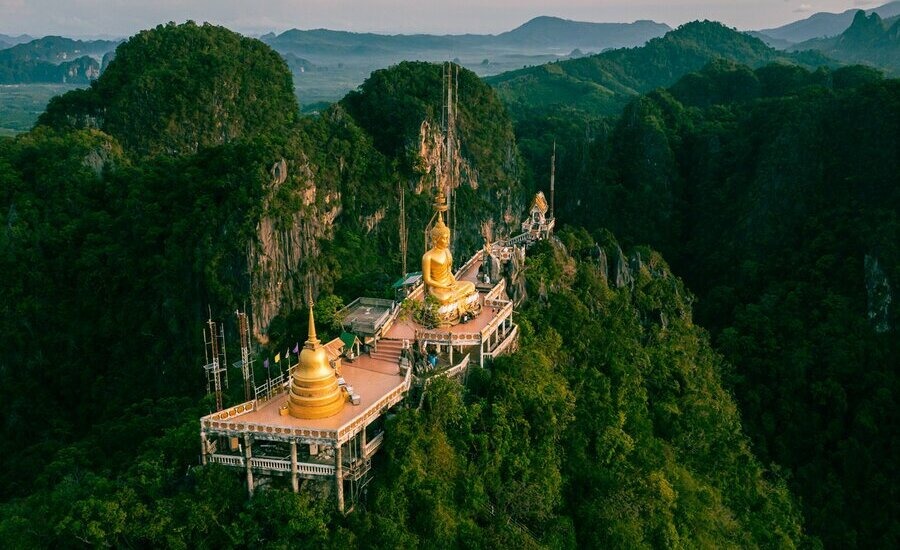
Tiger Cave’s Buddha seen from afar
At the top, the panoramic views over Krabi’s limestone landscape are the reward for a persevering hiker. Sunrise and sunset are especially beautiful here. It is also important to wear good shoes and bring water for the climb.
Statues at Wat Rong Khun
Wat Rong Khun, also known as the White Temple in Chiang Rai, is one of Thailand’s most unique temples. Its statues are intricate mixes of traditional Buddhist themes with modern art.
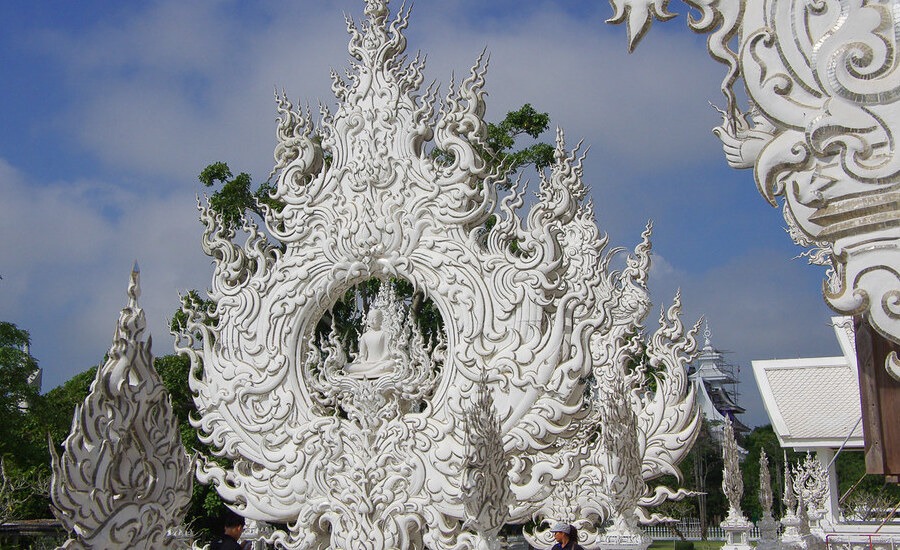
Unique White Buddha Statue at Wat Rong Khun
Visitors will see concepts from both Buddhist and Hindu beliefs, like the Naga, the God of Death, and Rahu, the haunting sea of souls with hands reaching skyward. These powerful images represent human desire, suffering, and the path to enlightenment. Wat Rong Khun is a must-see for travelers who want a deeper insight into modern Thai culture and symbolism.
Big Buddha in Phuket
Phuket’s Big Buddha sits atop Nakkerd Hill, overlooking the island. Standing 45 meters tall, it is one of southern Thailand’s most important landmarks. Made of white marble, the statue shines in the sunlight. The location also offers travelers sweeping views of Phuket Town and Chalong Bay.
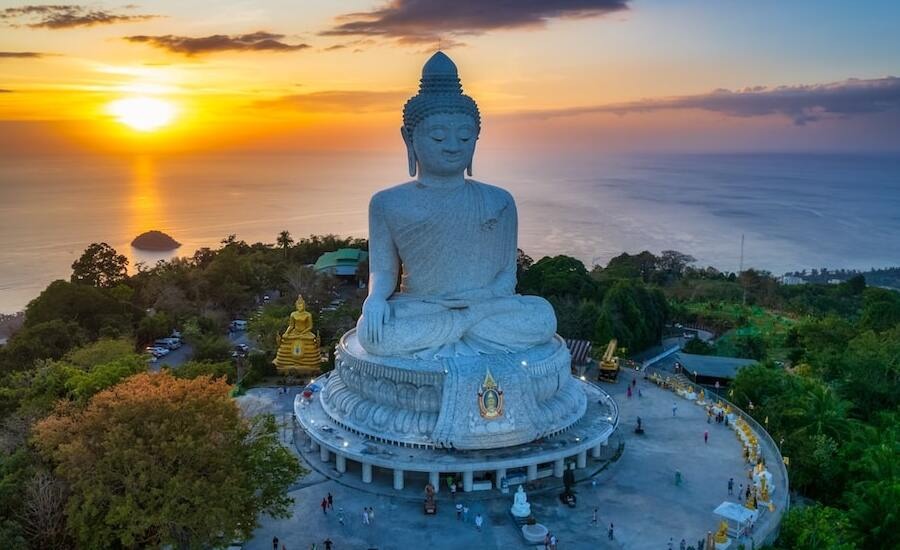
The sunset view of Phuket's Big Buddha
The atmosphere is very peaceful despite its popularity. Visitors can walk around the base and listen to soft chanting. Sunset is the best time to visit for cooler weather and views.
Frequently Asked Questions (FAQs)
Can tourists visit these Buddha statues freely?
Most statues are located in temples and are open to visitors. Many are free to enter, while some major sites may charge a small entrance fee. Entrance fees typically range from free to about USD 3-15 per person, depending on the temple and location.
What is the best time of day to visit Buddha statues?
Early morning is ideal for fewer crowds and cooler temperatures. Late afternoon is also good, especially for hilltop statues, as the light is beautiful and the views are more scenic.
What should I wear when visiting Buddha statues in Thailand?
Visitors should dress modestly, covering shoulders and knees. Avoid revealing too much skin or tight clothing. Some temples provide scarves or wraps if needed, but it’s best to prepare beforehand.
Is it okay to take photos of Buddha statues?
Yes, photography is usually allowed at Buddha statues and temples, but visitors should follow local guidance and avoid disrespectful poses or using flash if it’s prohibited.
Is it okay to touch a Buddha statue?
Touching, leaning on, or climbing Buddha statues is usually considered inappropriate. Visitors should admire them from a distance and behave calmly and respectfully.
Is a guide necessary to understand the significance of these statues?
A guide is not required, but having one can enhance your experience. Guides can explain the history, symbolism, and cultural meaning behind each statue, making visits more meaningful.
If you prefer a richer and more informative visit, feel free to contact Thai Unika for professional local guides and cultural tours tailored to your interests.
Conclusion
With stunning Buddha statues found across the country, Thailand is always proud of its culture and religion. Each statue is special in its own way and tells a story of faith, history, and artistry. When visiting the Land of Golden Temples, be sure to include these iconic Buddha statues in your journey.
Exploring these iconic Buddha statues in Thailand becomes even more rewarding when accompanied by experienced local guides. Cultural specialists at Thai Unika Travel help travelers uncover the meanings behind each sacred site.
You may like: A glimpse of Thailand 11 Days 10 Night
Our most popular tours
Kanchanaburi - Sukhothai - Ayutthaya - Bangkok - Chiang Mai - Chiang Rai - Chiang Saen - Luang Prabang Private
-
Thailand to Luang Prabang via Huayxay border 18 Days
-
Doi Inthanon National Park 3 Days 2 Nights
-
Hill tribe treks To The Less Seen Area Of Chiang Mai 3 Days
-
Short trip to Bangkok with your kid 5 days
-
 Cultural Connections from Singapore to Thailand 19D18N
-
 Thailand, Cambodia & Vietnam Border Crossing 15 Days
Tks for sharing