
About 80 km southwest of Bangkok, Samut Songkhram is one of Thailand's smallest provinces. The Mae Klong River and a network of canals run through communities where markets, orchards and riverside homes still form part of daily life. Most travellers know the province for Mae Klong Railway Market and Amphawa, but a day here can also take you to quiet temples, coconut-growing areas and smaller canal markets.
What Is Samut Songkhram Known For?
Mae Klong Railway Market and Amphawa Floating Market are the two places most visitors associate with Samut Songkhram. They are only part of the picture, though. Drive a little farther from the main market areas and the streets quickly give way to coconut groves, fruit orchards and narrow canals lined with houses.
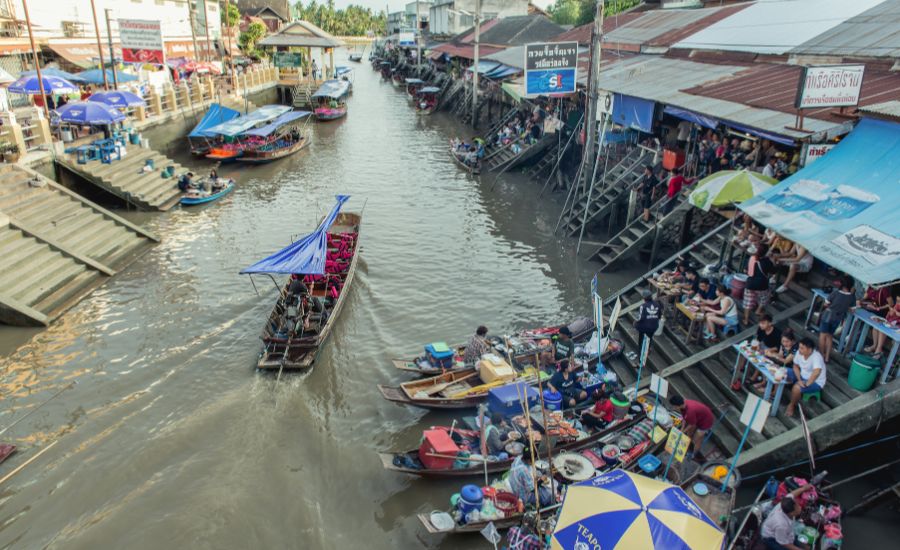
A lively view of boats navigating the canal at Amphawa Floating Market
This compact layout makes it possible to see several sides of the province in one day. You might watch the train pass through Mae Klong in the morning, stop at a temple or orchard after lunch, then reach Amphawa as the canal starts getting busier in the late afternoon.
What Is the History of Samut Songkhram?
The area now known as Samut Songkhram was historically connected with Ratchaburi and was known as Bang Chang and later Suan Nok, meaning “outer garden”. Its waterways and fertile land supported orchards, farming and river-based trade during the Ayutthaya period.
During the transition from the Ayutthaya Kingdom to the Thonburi period, the area was separated from Ratchaburi and became known as Mueang Mae Klong. It also played a role in the defence of the new Thonburi kingdom, particularly around Bang Kung, where King Taksin's forces established a camp against Burmese troops.
Samut Songkhram is also associated with the early Chakri dynasty. King Rama II was born in Amphawa in 1767, and the area remains closely connected with his legacy through the King Rama II Memorial Park.
When Is the Best Time to Visit Samut Songkhram?
Samut Songkhram is warm and humid throughout the year, but rainfall varies considerably by season. The wetter period generally runs from May to October, with September and October among the rainiest months. November becomes noticeably drier, while December to February are usually the most comfortable months for walking around markets and taking boat trips.
November to February is therefore the easiest period for a first visit. December and January are particularly comfortable for spending several hours outdoors, although afternoons can still feel hot.
One useful detail is that Amphawa Floating Market is a weekend attraction. The official Tourism Authority of Thailand listing gives Friday to Sunday opening, roughly from 10:00 a.m. to 8:30 p.m., so check the latest schedule before planning a weekday visit.
Further more: Best places to visit in Thailand in November
How Do You Get to Samut Songkhram?
Samut Songkhram is close enough to Bangkok for a day trip, although traffic can affect the journey time.
- From Bangkok: around 80 km by road, generally 1.5–2 hours by car, depending on traffic
- Private car or driver: the most convenient option if you want to combine Mae Klong, Amphawa and nearby temples
- Minivan: services connect Bangkok with Samut Songkhram, with onward local transport needed for individual attractions
- Train: possible via the Mae Klong railway line, but the route involves connections and takes longer than travelling directly by road
Road access is straightforward on the main Bangkok–Samut Songkhram route, but local roads around Amphawa and the canal communities are narrower.
Explore more: Top 8 Thailand Travel Tips First-Time Travelers Should Know
What Are the Best Things to Do in Samut Songkhram?
Visit Mae Klong Railway Market
Mae Klong looks much like a busy local fresh market until you notice the railway track running straight between the stalls. Vendors sell seafood, vegetables, fruit and cooked food just a short distance from the rails, with awnings stretched overhead for shade.
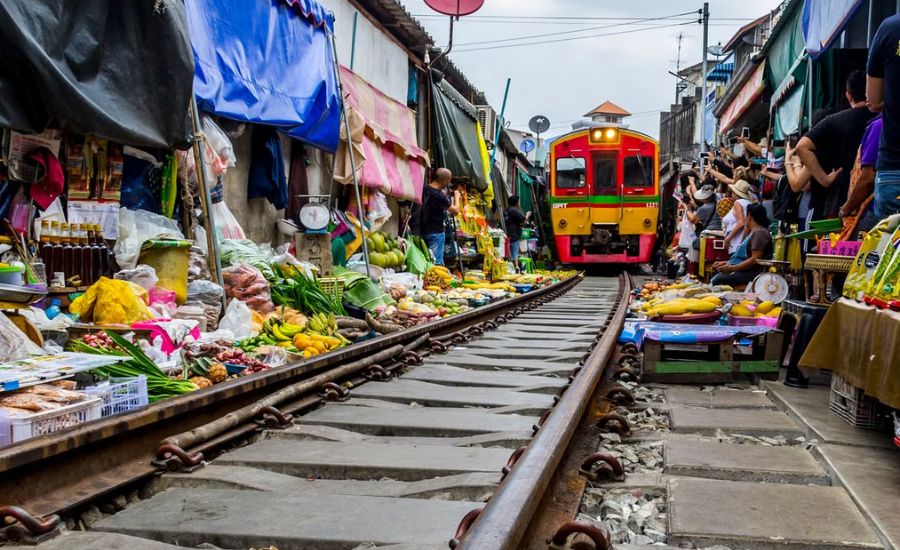
A train passing directly through the bustling stalls of Mae Klong Railway Market
The scene changes quickly when a train is due. Vendors fold back their awnings, shift baskets away from the track and make room for the train to pass. Within minutes, everything moves back into place and trading continues. Check the train schedule before visiting, and stay behind the vendors when the train approaches rather than standing on the tracks for photos.
Spend the Afternoon at Amphawa Floating Market
Amphawa is best visited later in the day, when food boats begin gathering along the canal and the waterfront shops become livelier. Grilled seafood, noodles, Thai sweets and cold drinks are easy to find as you walk along the narrow canal-side paths.
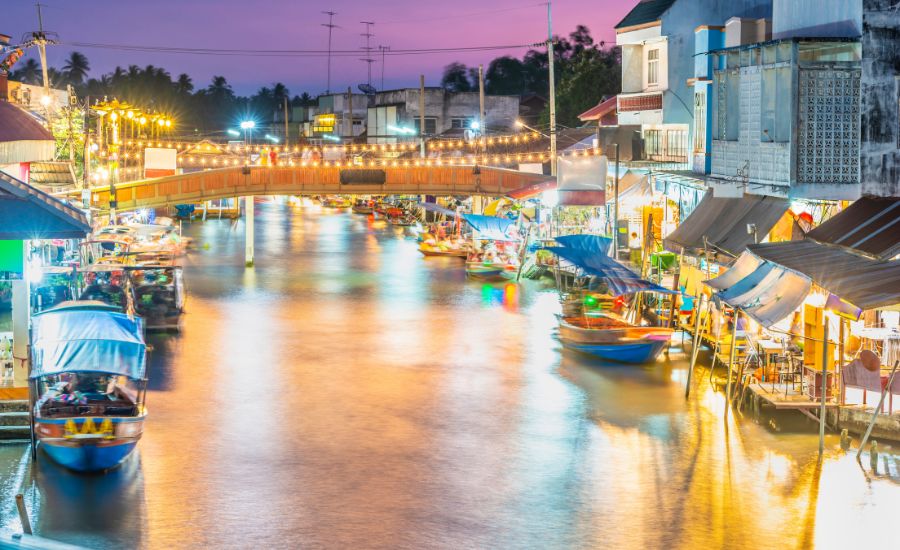
Amphawa Floating Market illuminated with warm lights as evening settles along the canal
The market gets noticeably busier toward the evening, especially on Saturdays. Arriving earlier in the afternoon gives you more time to explore before the main crowds arrive. Amphawa normally operates from Friday to Sunday, so check the latest opening days before planning your visit.
Take a Boat Through the Canals
Once you leave the busy Amphawa waterfront by boat, the surroundings become much quieter. The route passes wooden houses, small gardens and vegetation growing along the water, offering a closer look at communities that have developed around Samut Songkhram's canal network.
Some evening boat trips also head out to look for fireflies along the riverbanks. Sightings depend on the weather and conditions that night, so treat them as a possible highlight rather than the main reason for taking the trip.
Stop at Wat Bang Kung
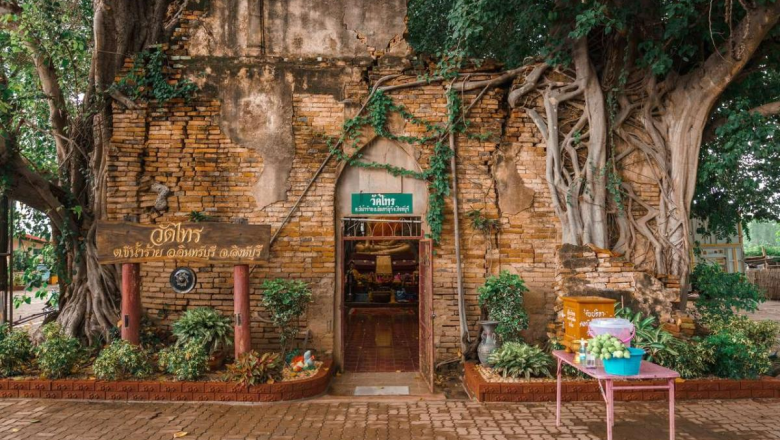
Wat Bang Kung is an easy stop between Mae Klong and Amphawa. Its best-known feature is a small Buddhist ordination hall almost enclosed by the roots and branches of a large banyan tree. Visitors can step inside to see the Buddha image while the tangled roots remain visible around the exterior walls.
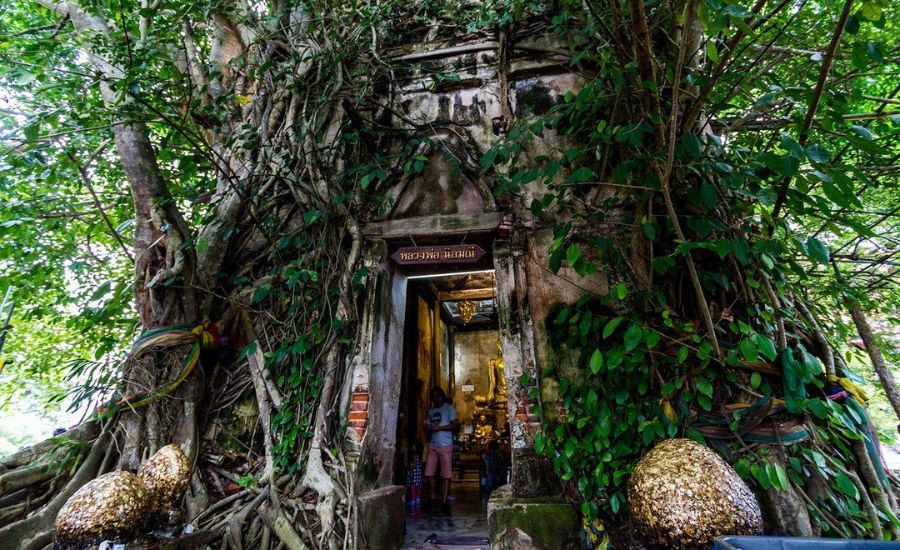
The ancient shrine of Wat Bang Kung enclosed within the massive roots of a banyan tree
You do not need to spend several hours here. A short visit is usually enough to see the temple and learn about Bang Kung's connection with the Thonburi period, making it practical to include alongside the markets on a one-day trip.
Visit Tha Kha Floating Market
Tha Kha offers a smaller-scale market experience away from the busier waterfront at Amphawa. Local vendors bring fruit, vegetables, coconut products and other produce from the surrounding farming areas, with some goods still sold directly from small boats.
The market is particularly interesting if you want to see another side of Samut Songkhram's canal life after visiting Amphawa. Opening days and activity can vary, however, so check the current schedule before making the trip.
Explore Mae Klong Railway Market and Amphawa Floating Market in one day with Thai Unika.
Travel Tips for Samut Songkhram
- Entrance fees: Mae Klong Railway Market and Amphawa Floating Market generally have no standard entrance fee. Boat trips and some attractions charge separately, so confirm the price before boarding.
- Time needed: Allow one full day for Mae Klong, Amphawa and one or two nearby stops. Stay overnight if you want a slower evening around Amphawa.
- Best timing: Visit Mae Klong earlier in the day, then continue to Amphawa in the afternoon. Check train times and market opening days before leaving Bangkok.
- Clothing: Wear light, breathable clothes and comfortable walking shoes. Bring something that covers the shoulders and knees if visiting temples.
- Safety: Keep a safe distance from the railway tracks and never stand on the rails for photographs. At floating markets, watch your footing around wet jetties and boat edges.
- Bring: Water, sun protection, cash in small denominations and a light rain jacket during the wetter months.
FAQs About Samut Songkhram
How long should I spend in Samut Songkhram?
One full day is enough to visit the main highlights, especially Mae Klong Railway Market and Amphawa Floating Market. If you want to explore Tha Kha, Wat Bang Kung, local communities or join an evening firefly boat trip without rushing, staying one night in the Amphawa area makes the visit more comfortable.
Is Samut Songkhram suitable for families?
Yes. Families can cover the main sights without much strenuous walking, and the train passing through Mae Klong Market is often the highlight for children. Keep younger children beside you at the railway market, as the train passes very close to the stalls and visitors.
Can I visit Samut Songkhram independently?
Samut Songkhram is easy to explore independently, especially if you are only visiting Mae Klong and Amphawa. If you want to add Wat Bang Kung or smaller markets such as Tha Kha, travelling by car or arranging a private transfer will make getting between stops much easier.
Is Samut Songkhram crowded?
It depends strongly on where and when you visit. Mae Klong Railway Market can become busy around train arrivals, while Amphawa is busiest on weekend afternoons and evenings. For a quieter experience, visit on Friday or arrive at Amphawa earlier in the afternoon rather than during the Saturday evening peak.
Conclusion
Samut Songkhram is close enough to Bangkok for a day trip, but it feels most interesting when you give the markets time to change through the day. See Mae Klong while the morning market is active, explore the smaller roads and canals in between, then reach Amphawa before evening. Stay overnight if you want to enjoy the canal after most day-trippers have left.
Samut Songkhram can also be added to a longer Central Thailand itinerary. Thai Unika can help connect it with Bangkok and other nearby destinations without turning the journey into a rushed series of day trips.