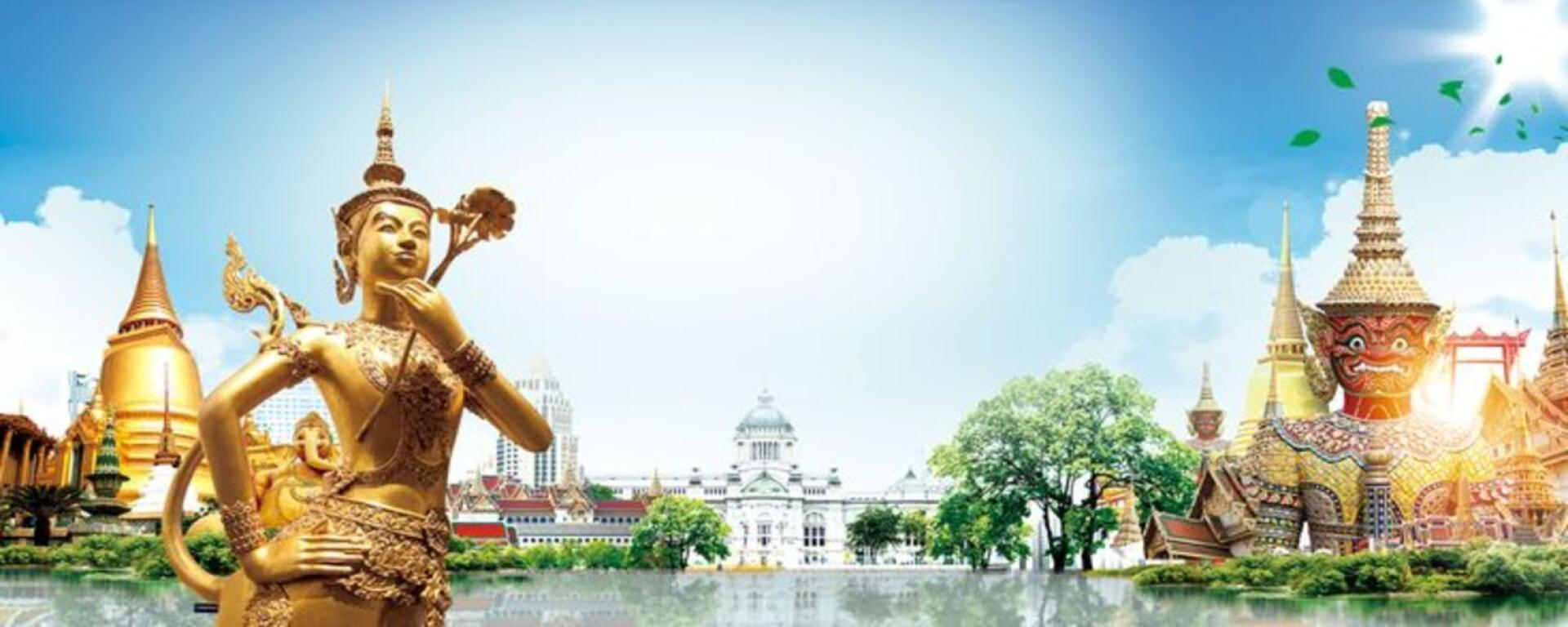
In Thailand, manners are an important part of daily life. Besides itineraries, travelers also wonder how to properly do Thai greetings and communicate with locals. Don’t let language become a barrier during your journey. Learning a few basic Thai phrases and cultural tips can make your Thailand trip smoother, friendlier, and more memorable. In this guide, Thai Unika will show you how to say hello in Thailand and communicate more confidently like a local.
How to Say Hello in the Thai Language?
Thai Greeting Phrases
In Thai, the most common way to say hello is “สวัสดี” (sah-wah-dee), which can be used for both greetings and farewells. To sound more polite, Thai speakers usually add gender-based ending particles after the phrase.
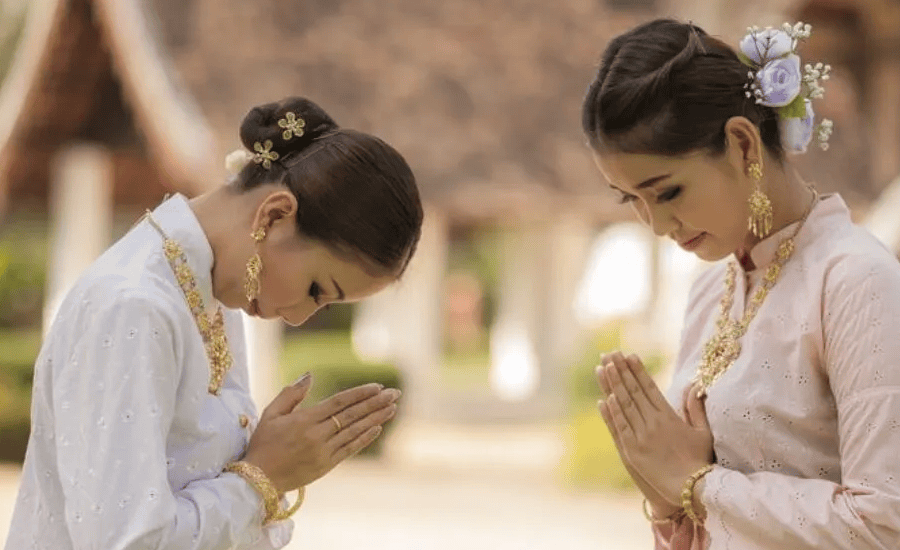
Greeting is an important communication manner in Thailand
Men typically say “สวัสดีครับ” (sawasdee khrap), while women say “สวัสดีค่ะ” (sawasdee kha). These small additions may seem simple, but they are an important part of Thai communication. This also reflects the country's strong emphasis on politeness and respect in daily interactions.
The Meaning of Thai Greeting Phrases
In Thai, the word “สวัสดี” (sawasdee) is a versatile greeting commonly used for both hello and goodbye. Rather than having a direct English equivalent of “hello”, the literal meaning of the word is well-being, peace, and positive wishes toward others.
More than just a simple greeting, “สวัสดี” is a representation of the warm and respectful nature of Thai culture. It is widely used in everyday conversations to show friendliness, politeness, and goodwill, making it an important part of social interaction in Thailand.
Tone in Thai Greetings
In Thai, tones are extremely important because changing the tone of a word can completely change its meaning. The greeting “สวัสดี” (sawasdee) is pronounced with a relatively steady mid tone, making it sound smooth and balanced when spoken.

Thai Greetings are not only about words but also tones and gestures
The polite endings “khrap” and “kha” also have different tones. “Khrap,” commonly used by men, is spoken with a shorter and slightly sharper high tone. Meanwhile, “kha,” used by women, has a softer falling tone, where the voice starts slightly higher and gently drops at the end. These tone differences help Thai speech sound more natural and polite in everyday conversations.
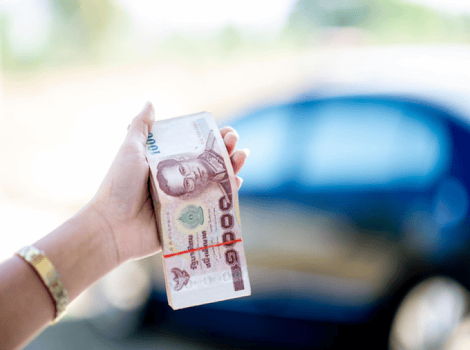
Learning how to properly use money in Thailand at: Money in Thailand: Currency, Payment & Travel Tips
The Wai in Thai Greetings
Besides verbal greetings, Thailand is also well known for the “wai,” a traditional gesture used to show respect and politeness. The wai is commonly used when greeting someone, saying thank you, apologizing, or showing respect in different social situations. More than just a formal gesture, the Wai shows important Thai cultural values such as humility, kindness, and harmony in everyday interactions.
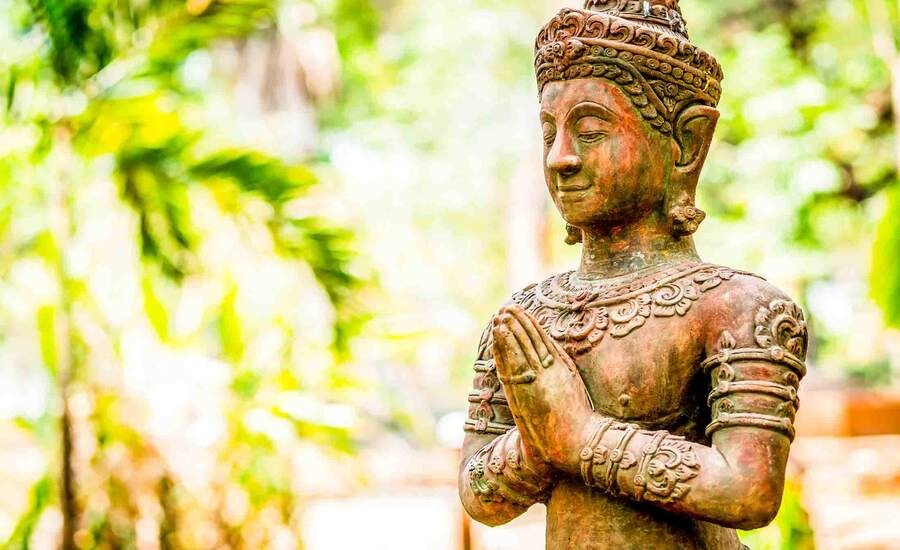
The Wai is what makes Thai greetings unique
For visitors, you are not expected to initiate the wai first in every situation. However, returning the gesture with a smile, a slight nod, or a polite wai is usually appreciated by locals. Understanding when and how to use the wai can help travelers communicate more respectfully and connect better with Thai culture during their trip.
To perform a wai, place your palms together in a prayer-like position with your fingers pointing upward. Your hands are usually held near the chest or slightly closer to the face depending on the level of respect being shown.
Other Cultural Tips to Communicate in Thailand
Besides learning basic Thai greetings, understanding a few cultural habits can also help travelers communicate more naturally and respectfully during their time in Thailand. Here are some useful tips that could help you be more confident in speaking to Thai people:
1. Learn a few basic Thai phrases
“สวัสดี” (sawasdee) is the most common greeting and can be used for both hello and goodbye. Adding “khrap” or “kha” at the end makes your greeting sound more polite and respectful.
2. Pay attention to social context
In Thailand, respect is very important in daily interactions. When using the wai, the position of your hands and the depth of your bow may change depending on the age or social status of the person you are greeting.
3. Return polite gestures when possible
If someone greets you with a wai or a polite greeting, responding with a smile, nod, or wai is considered respectful and friendly.
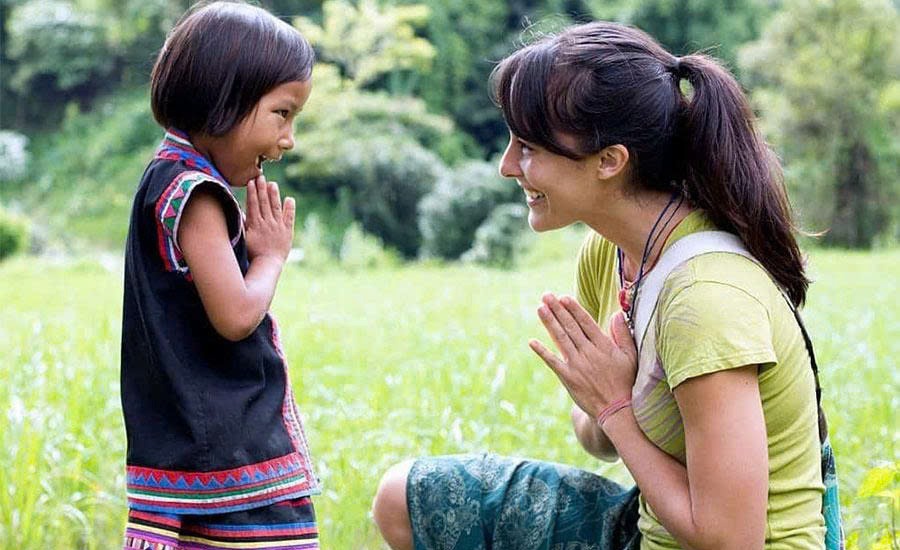
Great greetings can leave a positive impression on the locals
4. Avoid too much physical contact
Thai people are generally more reserved in public, especially with strangers or in formal situations. A smile or slight nod is often more appropriate than hugging or excessive touching.
5. Smile genuinely
Thailand is famously known as the “Land of Smiles,” and smiling plays an important role in communication. A warm smile can help create friendly interactions even when there is a language barrier.
6. Stay patient and open-minded
Thai culture values calmness, politeness, and patience. Speaking gently and staying relaxed during misunderstandings will usually lead to smoother communication.
7. Don’t worry too much about mistakes
Most Thai people appreciate it when visitors make an effort to learn their language and culture. Even if your pronunciation is not perfect, locals will often respond positively to your effort and friendliness.
Explore other useful tips when traveling in Thailand at: Top 8 Thailand Travel Tips First-Time Travelers Should Know
Some Common Phrases to Communicate in Thailand
Besides learning how to say hello in Thai, knowing a few simple everyday phrases can make traveling in Thailand much easier and more enjoyable. Here are some common Thai expressions frequently used by tourists:
- Thank you: Khob khun (ขอบคุณ), you can add “khrap” (male) or “kha” (female) at the end to sound more polite.
- Yes: Chai (ใช่)
- No: Mai (ไม่)
- Sorry/Excuse me: Khor thot (ขอโทษ)
- Please : Karuna (กรุณา), travelers also often add “khrap na” or “kha na” to sound softer and more polite in conversation.
- Where is…?: Tee nai (ที่ไหน)
- How much?: Tao rai (เท่าไหร่)
- Help: Chuay (ช่วย)
Conclusion
Learning a few Thai greetings and understanding basic cultural etiquette can make your experience in Thailand much more enjoyable and meaningful. Thailand is known for its warmth, friendliness, and strong sense of respect in daily interactions. You do not need to speak perfect Thai. A genuine smile, polite attitude, and willingness to learn are often more than enough to connect with locals during your trip.
For more Thailand travel tips, cultural guides, and useful local insights, follow Thai Unika and make your journey through the Land of Smiles even more memorable.
Find out your perfect personalized Thailand itineraries at: Thailand tour
Our most popular tours

Kanchanaburi - Sukhothai - Ayutthaya - Bangkok - Chiang Mai - Chiang Rai - Chiang Saen - Luang Prabang Private




-
Thailand to Luang Prabang via Huayxay border 18 Days
-
Doi Inthanon National Park 3 Days 2 Nights
-
Hill tribe treks To The Less Seen Area Of Chiang Mai 3 Days
-
Short trip to Bangkok with your kid 5 days
-
 Cultural Connections from Singapore to Thailand 19D18N
-
 Thailand, Cambodia & Vietnam Border Crossing 15 Days