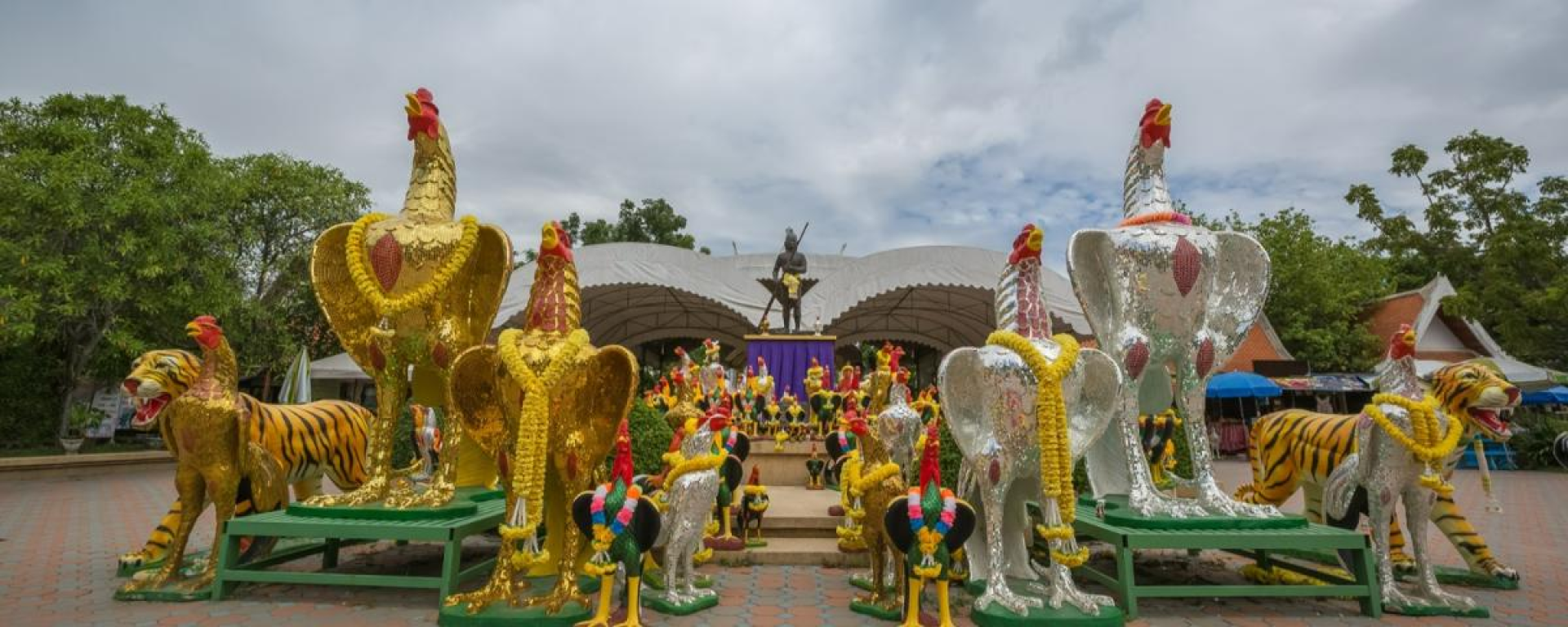
Located along the Gulf of Thailand and the Tha Chin River, around 40 km southwest of Bangkok, Samut Sakhon is a coastal province in Central Thailand. The province is best known for its fishing industry, seafood markets, sea-salt production, and riverside communities. Visiting Samut Sakhon is a chance to explore a more local side of Central Thailand, with bustling fishing markets, historic temples, coastal landscapes, traditional communities, and local handicrafts.
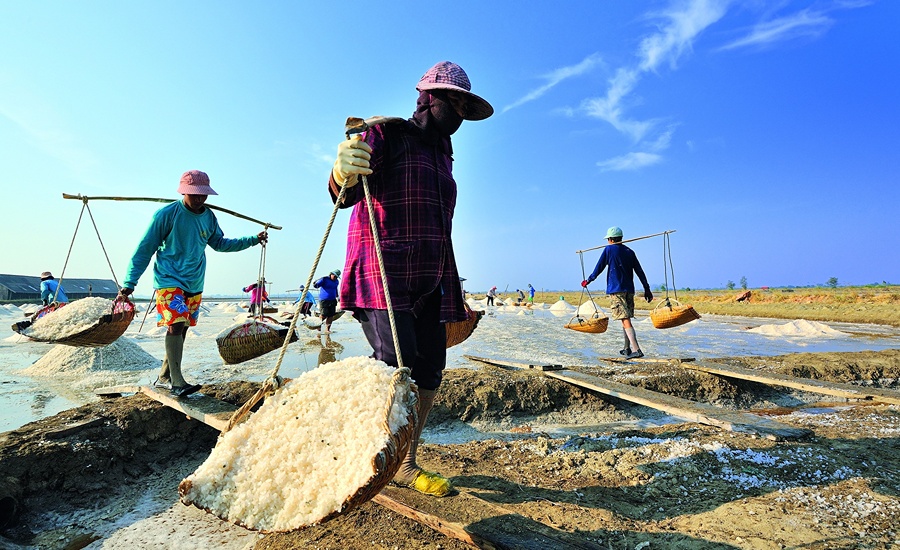
Salt farmers harvesting sea salt in Samut Sakhon
What makes Samut Sakhon special
Samut Sakhon is strongly connected with Thailand's fishing and coastal traditions. The province is one of the country's important fishing areas, while Mahachai serves as a major center for seafood trading. Fresh and dried seafood, fishing boats, riverside markets, and local food play an important role in everyday life in the province.
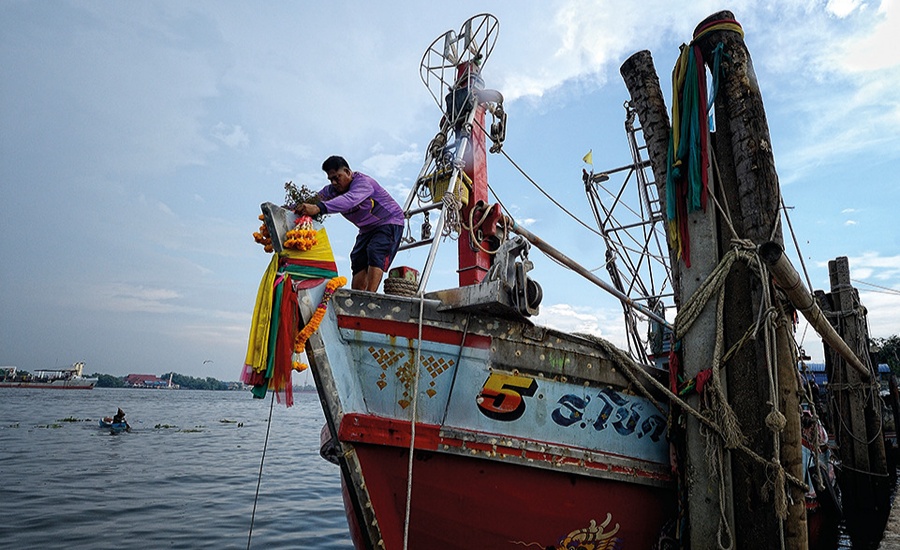
A decorated fishing boat at Tha Chalom fishing village
The province also has a long history dating back to the Ayutthaya period. One of the historical figures in Samut Sakhon is Pan Thai Norasing, whose story of loyalty has been passed down through generations. Beyond its history, Samut Sakhon is also home to traditional communities such as Tha Chalom and Don Kai Dee, providing visitors with the opportunity to learn about local crafts, temples, and ways of life.
Weather in Samut Sakhon
Samut Sakhon is in a tropical climate area, making it generally hot and humid throughout the year. The hottest period usually falls between March and May, while the rainy season generally lasts from May to October. November to February is usually drier and more comfortable for travelers to explore outdoor attractions, markets, temples, and coastal areas.
Top Destinations to Explore in Samut Sakhon
Mahachai Market
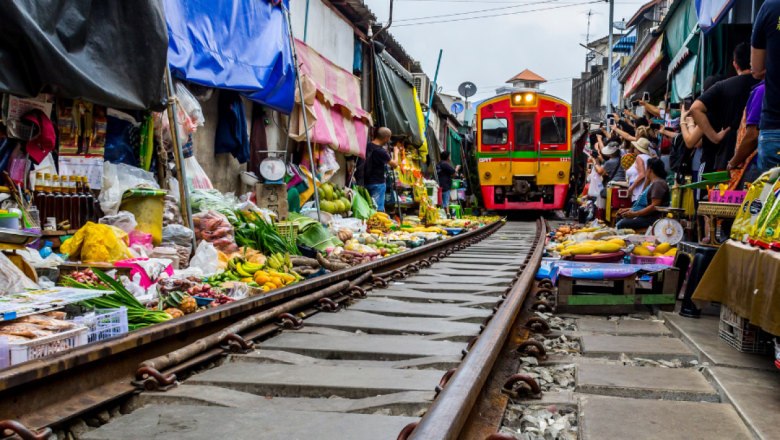
Mahachai Market is one of the best places to experience the local character of Samut Sakhon. Being next to the Tha Chin River, the market is an important trading center where visitors can find fresh seafood, dried seafood, vegetables, fruits, and other local products.
Walking through the market, you can see local vendors selling prawns, squid, crabs, fish, and various seafood products. It is also a good place to try local food and experience the lively atmosphere of one of Thailand's major fishing communities.
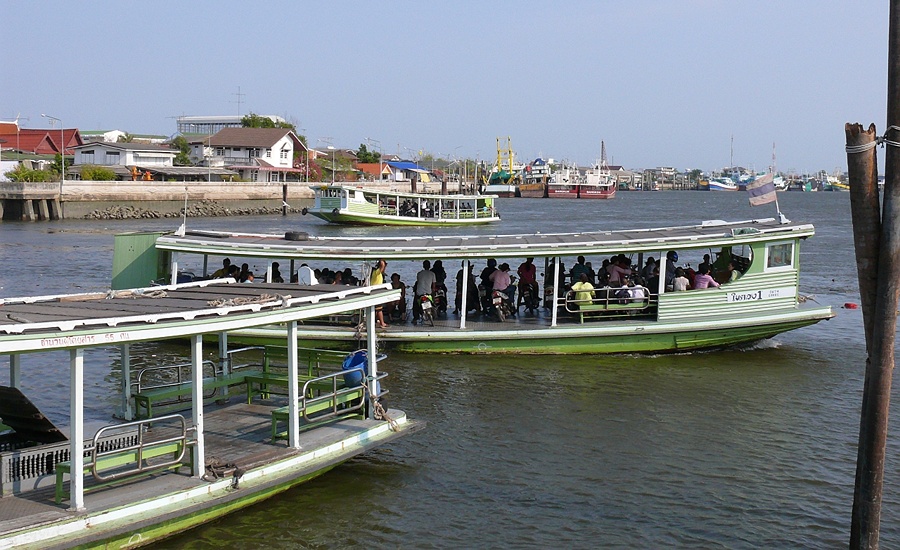
Ferry crossing the Tha Chin River at Mahachai
Wat Suthiwat Wararam (Wat Chong Lom)
Wat Suthiwat Wararam, or commonly known as Wat Chong Lom, is an important temple situated by the side of the mouth of the Tha Chin River in Tha Chalom. The temple offers views of the estuary from the front and the Tha Chin River from the back.
The temple has a strong connection with the history of Tha Chalom. In front of the temple stands a monument of King Rama V, commemorating his visit to Tha Chalom and its historical importance as Thailand's first sanitary district. Visitors can pay respects at the temple while enjoying views of the surrounding riverside area.
Wat Grok Grak
Wat Grok Grak is a distinctive temple in Mueang Samut Sakhon District, best known for its unusual Buddha statue wearing sunglasses. According to local tradition, the sunglasses were added after villagers suffering from conjunctivitis came to pray to the statue and placed gold leaf over its eyes. The temple's abbot later put sunglasses on the statue to prevent this practice.
Today, the Buddha image has become one of the most recognizable features of Wat Grok Grak. A visit here offers travelers a chance to see a local religious tradition that is quite different from the more familiar temple experiences in Bangkok.
Explore more of interesting temples in Thailand here
Phanthai Norasing Historical Park
Phanthai Norasing Historical Park is said to have connection with the story of Pan Thai Norasing, a famous figure from the Ayutthaya period. According to the traditional story, Pan Thai Norasing served as a helmsman for King Sanphet VIII and demonstrated great loyalty and responsibility while serving his king.
The park includes a shrine dedicated to Pan Thai Norasing as well as natural areas and mangrove trails. It is an interesting place for travelers who want to combine Thai history with a quieter natural environment.
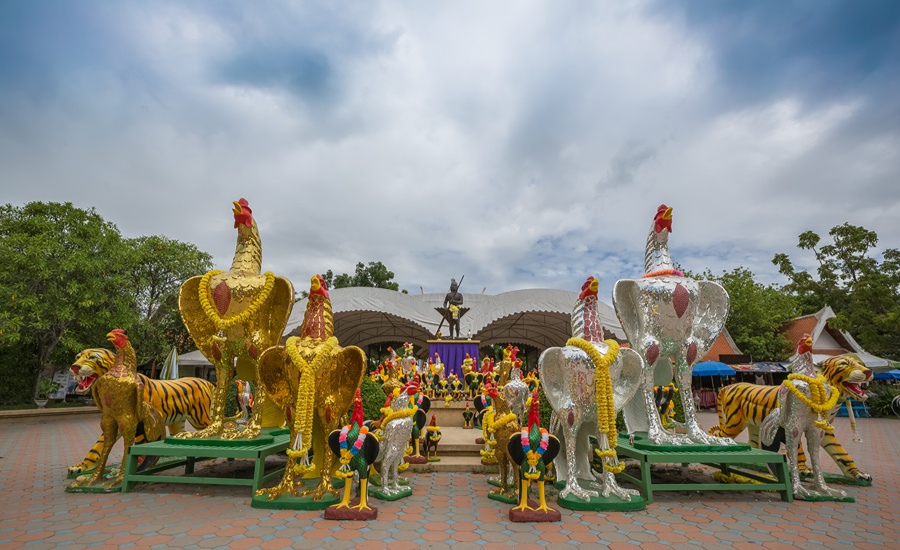
The shrine of Pan Thai Norasing with its rooster statues
Don Kai Dee Benjarong Village
Don Kai Dee, also known as Benjarong Village, is a local community famous for traditional Thai porcelain. Local craftsmen have passed down their skills through generations, creating colorful Benjarong ceramics with detailed patterns and designs.
Visitors can learn more about the traditional production process, see local handicrafts, and discover another side of Samut Sakhon's cultural heritage beyond its fishing communities. The village is particularly interesting for travelers who enjoy traditional crafts and community-based experiences.
What to Eat in Samut Sakhon
- Fresh seafood - Samut Sakhon is famous for its fishing industry, so fresh prawns, squid, crabs, and fish are among the local specialties.
- Dried seafood - Mahachai is also known for dried and processed seafood, which is popular as a local product and souvenir.
- Thai seafood dishes - Local restaurants and markets offer dishes prepared with freshly caught seafood.
- Local market snacks - Mahachai and other local markets have a variety of Thai snacks, sweets, and savory foods.
How to get to Samut Sakhon
From Bangkok
Samut Sakhon is located around 40 km southwest of Bangkok, so visitors can come here from the capital. By car or private transfer, the journey usually takes around 1 to 1.5 hours.
By Taxi or Private Car
A private car is a convenient option for exploring Samut Sakhon because attractions are located in different areas of the province. Private transportation makes it easier to travel among Mahachai Market, Tha Chalom, temples, historical sites, and local communities in one journey.
Check out the best apps for travelling in Thailand to make getting around easier
Where to Stay in Samut Sakhon
Samut Sakhon has a selection of local hotels, guesthouses, and mid-range accommodations, particularly around Mueang Samut Sakhon and the main roads.
- Budget-friendly: Local guesthouses and simple hotels around Mahachai and the provincial town
- Mid-range: Comfortable hotels around Mueang Samut Sakhon and major roads
- Longer stays: Apartments and simple residences in urban and community areas
How Much Does It Cost to Travel to Samut Sakhon?
- Local food: Around THB 50-150 per meal
- Mid-range restaurant: Around THB 150-350 per person
- Local transport: Around THB 20-100 depending on the distance
- Budget accommodation: Around THB 500-1,000 per night
- Mid-range accommodation: Around THB 1,000-2,500 per night
- Daily budget: Around THB 500-1,000 for a simple day trip, excluding private transportation and major attraction fees.
Travel Tips for Samut Sakhon
- Start your day early if you want to explore Mahachai Market when it is most active.
- Wear comfortable shoes when walking through markets, temples, and community areas.
- Dress respectfully when visiting temples, with shoulders and knees covered.
- Bring cash for local markets, food stalls, and small community shops.
- Try some fresh or dried seafood to experience one of the province's best-known local products.
- A private car or transfer is useful if you want to combine several attractions across the province.
- Consider combining Samut Sakhon with nearby Central Thailand destinations such as Samut Songkhram or Nakhon Pathom for a longer itinerary.
Frequently Asked Questions
What should I buy in Samut Sakhon?
Dried seafood, fresh seafood products, and traditional Benjarong porcelain are among the local products worth looking for. Mahachai is particularly well known for its seafood, while Don Kai Dee is known for traditional Thai porcelain.
How far is Samut Sakhon from Bangkok? How can I get to Samut Sakhon from Bangkok?
Samut Sakhon is approximately 40-50 km southwest of Bangkok, making it a convenient destination for a day trip from the capital. Travelers can reach Samut Sakhon by car, taxi, or bus from Bangkok. A private transfer is a convenient option for those planning to visit several attractions in different parts of the province.
Discover more of Thailand with our Around Bangkok Area 7-Day Tour
Can I visit Samut Sakhon on a day trip?
Yes. Samut Sakhon can be explored on a day trip from Bangkok. Visitors can spend the day discovering Mahachai Market, visiting local temples, exploring Tha Chalom, and sampling fresh seafood.
Conclusion
Visiting Samut Sakhon is an opportunity for travelers to experience a more local side of Central Thailand, from the busy seafood markets of Mahachai and the riverside community of Tha Chalom to historic temples, traditional Benjarong crafts, and the story of Pan Thai Norasing. Its strong signature of fishing, seafood, rivers, and local communities makes Samut Sakhon a worthwhile destination for travelers looking beyond the better-known attractions around Bangkok.
Discover Samut Sakhon now with a private journey tailored to your interests.
Explore the best Central Thailand itineraries at: Central Thailand tour